
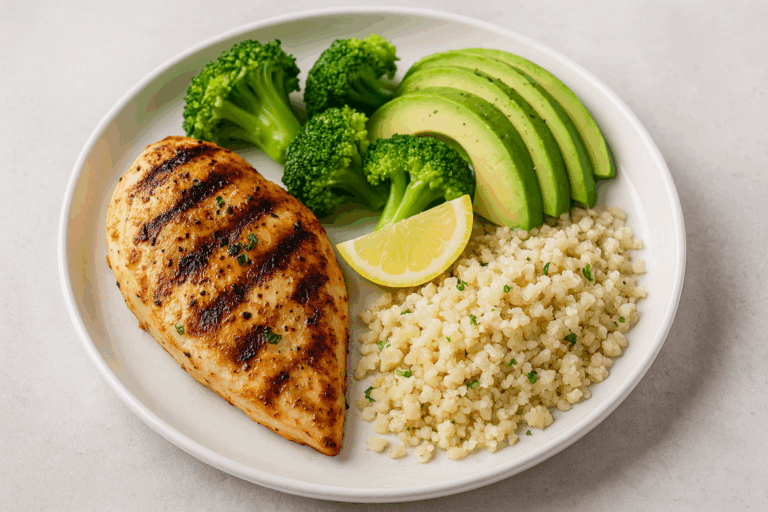
Curious about keto? Here’s a clear, beginner-friendly overview of what it is, how ketosis works, and exactly what to eat to get started—without the overwhelm.
What Is Keto?
The ketogenic (“keto”) diet is a well-known low-carb approach that shifts your body’s main fuel from carbs to fat. When carbs are low, your liver produces ketones, an alternative fuel your body can use for energy. Many people turn to keto to support weight loss, steady energy, and a simpler way of eating.
Also Known As
- Low-Carb Diet
- Ketogenic Diet
- LCHF (Low Carb, High Fat)
Key Idea
Lower carbs → reduce glucose/insulin spikes → encourage the body to use stored fat and ketones for fuel.
Carbs, Insulin & Fat Storage
Meals high in carbohydrates raise glucose (blood sugar), which raises insulin. Insulin helps move glucose into cells for energy. When glucose is abundant, your body prefers to burn it—so dietary fat is more likely to be stored.
When Carbs Go Down
Reducing carbohydrate intake lowers glucose and insulin. With less glucose available, your body begins relying more on fat and ketones—setting the stage for ketosis.
How Ketosis Works
Ketosis is a natural state where your body uses fat and ketones as its primary fuel. You don’t achieve ketosis by starving yourself—just by keeping carbs low enough for your metabolism to switch fuels.
Why People Like It
- Often supports weight loss
- Can feel steady and focused (fewer energy dips)
- Simple meal structure once you learn the basics
What to Eat on Keto
Most beginners aim for about 20g net carbs per day (some go up to ~50g). Build meals from:
- Protein: eggs, poultry, beef, pork, seafood
- Healthy fats: olive oil, avocado, butter/ghee, coconut oil
- Low-carb veggies: leafy greens, broccoli, cauliflower, zucchini
- Dairy (as tolerated): cheese, cream, Greek yogurt (unsweetened)
- Nuts & seeds: almonds, walnuts, pecans, chia, flax
What About Fruit?
Most fruit is higher in carbs. Common keto-friendly exceptions (in modest portions) include:
- Berries
- Avocado
- Star fruit
Foods to Limit or Skip
- Refined carbs: bread, pasta, rice, most cereals
- Beans/legumes (higher carb)
- Sugary foods and drinks
- Starchy sides: potatoes, most grains
Snack Ideas
- Cheese, nuts, seeds
- Almond butter with celery
- Olives or deli roll-ups
Getting Started (Simple Plan)
- Set your carb target: many begin at ~20g net carbs/day.
- Plan meals: protein + non-starchy veg + healthy fats.
- Stock staples: eggs, meats, leafy greens, olive/avocado oil.
- Track for 1–2 weeks: learn portions and hidden carbs.
Make It Easier
- Repeat 2–3 go-to breakfasts/lunches/dinners
- Prep veggies and proteins once or twice a week
- Season boldly—herbs, spices, citrus, and salts
FAQ: Keto Basics
Is keto just starving?
No. Ketosis comes from lowering carbs—not from skipping food entirely. You’ll still build satisfying meals.
How fast will I enter ketosis?
It varies. Stricter carb limits typically get you there faster. Many beginners use ~20g net carbs/day to start.
Do I have to count every gram forever?
Not necessarily. Tracking helps at first; most people learn portion sizes and favorite meals they can repeat.