
Why Your Macros Matter More Than Your Willpower On Keto
Most beginners do not fail keto because they lack discipline. They fail because their macros are wrong from day one. Too little protein, way too much fat, or carbs that quietly creep above ketosis levels will stall fat loss, even if you feel like you are “doing everything right.”
A keto macros calculator for fat loss beginners removes the guesswork. Instead of copying someone else’s numbers from a Facebook group, you get targets that match your body, lifestyle, and goal timeline. When your macros are dialed in, you can predictably lose fat, protect muscle, and avoid the “keto brain fog” that pushes many people back to carbs.
This guide walks you through how to use a keto macros calculator effectively, what numbers actually matter, how to adjust them, and how to turn those numbers into real food on your plate. By the end, you will know exactly what to enter, what to aim for, and what to change if your progress stalls.
How A Keto Macros Calculator Works For Fat Loss
A good keto macros calculator turns your body data and goals into daily targets for calories, protein, fat, and carbs. Understanding the logic behind it helps you trust the numbers and adjust them intelligently.
The Inputs You Need To Get Right
Most calculators will ask for:
- Age, sex, height, and weight
- Body fat percentage or activity level
- Goal: fat loss, maintenance, or muscle gain
- Target rate of weight loss
If you do not know your body fat percentage, choose an activity level category and let the calculator estimate. For most beginners:
- “Sedentary” if you sit most of the day and rarely exercise
- “Lightly active” if you get 5–8k steps per day or light workouts
- “Moderately active” or above only if you train hard 3+ times per week
Overstating activity is a common reason calculators give you too many calories and too much fat.
Key Takeaway: Be conservative with your activity setting. It is better to start with slightly lower calories and adjust up than to stall for weeks with numbers that are too high.
What The Calculator Actually Calculates
Behind the scenes, a keto macros calculator typically:
- Estimates your Basal Metabolic Rate (BMR), which is calories burned at rest
- Applies an activity multiplier to estimate your Total Daily Energy Expenditure (TDEE)
- Subtracts a calorie deficit for fat loss, usually 15–25 percent
- Allocates those calories into:
- Protein, usually 0.7–1.0 grams per pound of goal body weight
- Carbs, usually 20–30 grams net per day for nutritional ketosis
- Fat, which fills in the remaining calories
A calculator is not magic. It is a starting estimate that you refine based on real world results.
Setting Your Keto Macros For Sustainable Fat Loss
Once you have your numbers, the next step is deciding if they fit your life and goals. Here is how to think through each macro.
Protein: Non‑Negotiable For Preserving Muscle
For fat loss beginners, protein is the macro that protects your lean mass, keeps you full, and improves diet adherence.
Typical starting target:
- 0.7–0.9 g per pound of current body weight if you are already overweight
- 0.8–1.0 g per pound of goal body weight if you are closer to goal
Example:
A 200 lb beginner might start at 130–160 g of protein per day.
Signs your protein is too low:
- Constant hunger despite calories being “on target”
- Noticeable loss of strength in the gym
- “Skinny fat” look as you lose weight
Carbs: Low Enough To Actually Reach Ketosis
Most beginners should keep:
- Net carbs at 20–30 g per day
- Total carbs usually under 50 g per day
Common sources that quietly break this limit:
- “Keto” bars that have 10–15 g net carbs
- Heavy use of nuts and nut butters
- Large portions of low‑carb vegetables without tracking
Fat: The Flexible Lever For Faster Or Slower Loss
Once protein and carbs are set, fat fills the remaining calories. For fat loss beginners:
- Do not “chase fat” just to hit a macro number
- Use fat as a lever:
- Higher fat = more calories, slower loss, often better satiety
- Lower fat = fewer calories, faster loss, sometimes more hunger
Example daily macro breakdown for a 200 lb beginner:
| Macro | Target | Notes |
|---|---|---|
| Protein | 140 g | About 560 calories |
| Net Carbs | 25 g | About 100 calories |
| Fat | 110 g | About 990 calories |
| Total | ~1,650 kcal | Moderate deficit for steady fat loss |
Pro Tip: When you hit a plateau, adjust calories by 100–150 per day through fat, not protein or carbs. Keep protein and carb targets steady.
Example Macro Setups For Different Beginner Profiles
To make this concrete, here are sample starting macros for common scenarios. These are estimates, not prescriptions, but they show what realistic targets look like in practice.
[IMAGE: Description of the image – style: illustration. A simple side‑by‑side illustration showing three different people (busy professional, active gym‑goer, and busy parent) each with their macro breakdown displayed in text bubbles.]
Busy Professional, Minimal Exercise
- Female, 38, 5’5", 180 lb
- Desk job, walks 4k steps per day
- Goal: steady fat loss, no intense workouts
Likely calculator output:
- Calories: 1,450–1,550
- Protein: 110–120 g
- Net carbs: 20–25 g
- Fat: 95–100 g
Macro strategy:
- Prioritize convenient high‑protein options: eggs, Greek‑style yogurt, canned tuna, rotisserie chicken
- Keep “office snacks” strictly to keto‑friendly, portion‑controlled foods
Recreational Lifter Or Runner
- Male, 35, 5’10", 210 lb
- Lifts 3x/week, some cardio
- Goal: lose fat while maintaining performance
Likely calculator output:
- Calories: 1,900–2,100
- Protein: 160–180 g
- Net carbs: 25–30 g (timed around workouts)
- Fat: 110–130 g
Macro strategy:
- Place most carbs pre‑ and post‑workout
- Use higher protein at every meal to support recovery
Busy Parent Cooking For The Family
- Female, 42, 5’4", 200 lb
- On her feet with kids, occasional walks
- Goal: fat loss with family‑friendly meals
Likely calculator output:
- Calories: 1,500–1,650
- Protein: 120–130 g
- Net carbs: 25 g
- Fat: 95–110 g
Macro strategy:
- Build family meals around shared proteins: taco bowls, bunless burgers, sheet‑pan chicken and veggies
- Add carbs for kids through rice, potatoes, or tortillas, while keeping her plate low‑carb
Turning Your Keto Macros Into Real Meals
Numbers alone will not help if you cannot translate them into breakfast, lunch, dinner, and snacks that fit a busy schedule.
Step‑By‑Step: One Day Of Eating To Hit Your Macros
Assume a target of:
- 1,600 calories
- 130 g protein, 25 g net carbs, 110 g fat
Sample day:
- Breakfast:
- 3 eggs cooked in 1 tbsp butter
- 2 slices bacon
- ½ avocado
- Black coffee
- Lunch:
- 5 oz grilled chicken
- 2 cups mixed leafy greens, ½ cup cucumber
- 2 tbsp olive oil and vinegar dressing
- Snack (optional):
- 2 oz cheddar cheese
- 10 olives
- Dinner:
- 6 oz salmon
- 1 cup roasted broccoli in 1 tbsp olive oil
- Side salad with 1 tbsp olive oil
This hits roughly:
- Protein: ~135 g
- Net carbs: ~20–22 g
- Fat: ~115 g
Key Takeaway: Build each meal around a solid protein source first. Add low‑carb vegetables, then layer in fats through oils, cheese, avocado, and fattier cuts of meat.
Tracking Tools That Make It Easier
You can track macros with:
- Apps such as Cronometer, Carb Manager, or MyFitnessPal
- A basic spreadsheet where you log common meals
- Pre‑planned meal templates you repeat several times per week
For most beginners, using an app for 2–4 weeks is enough to learn portion sizes and macro content. After that, tracking becomes much simpler and faster.
[IMAGE: Description of the image – style: illustration. A smartphone screen showing a macro tracking app beside a plate divided into protein, fat, and low‑carb veggies segments.]
Avoiding The Biggest Macro Mistakes Beginners Make
Even with a good keto macros calculator, certain patterns stall progress. Being aware of them keeps your fat loss on track.
Overeating “Keto” Fats
Eating unlimited fat because “keto burns fat” usually means:
- Calories are too high
- Dietary fat is burned instead of body fat
Warning signs:
- Scale weight is not moving for 2–3 weeks
- You rely heavily on fat bombs, heavy cream, cheese plates, and nut butters
Underestimating Carbs
Net carbs creep up when you:
- Do not weigh or measure portions of nuts, seeds, or nut flours
- Use multiple “low‑carb” products per day
- Ignore carb content in sauces, dressings, and condiments
Warning: A daily “keto dessert,” “keto bread,” and “keto bar,” even if labeled low‑carb, can easily push you over 50 g of total carbs and out of ketosis.
Not Adjusting When Progress Stalls
If you have followed your macros consistently for 3–4 weeks and:
- You have lost less than 2 lb total
- Your measurements and clothes have not changed
Consider:
- Reducing daily calories by 100–150 through fat
- Evaluating weekend intake for hidden carb or calorie overages
- Increasing daily steps by 2–3k to support the deficit
Using Keto Macros Calculators Long Term: When And How To Adjust
Your macros are not static. As you lose weight, your calorie needs change. If performance or energy dips, you also may need to tweak targets.
When To Recalculate Your Macros
Good times to plug your new stats back into a keto macros calculator for fat loss beginners:
- Every 8–12 lb of weight lost
- Any time your schedule or activity changes significantly
- When you move from aggressive fat loss to more moderate loss or maintenance
This keeps your deficit appropriate, not overly aggressive or too small.
Adjusting For Training And Performance
If you are a fitness enthusiast or recreational athlete:
- Keep protein on the higher end of the recommended range
- Time most of your net carbs around training sessions
- Do not drop calories so low that recovery suffers
If you notice poor sleep, irritability, or heavy fatigue, slightly increase calories by 100–150 per day from fat and re‑evaluate for 7–10 days.
Expert Insight: Many active people do better cycling between slightly higher‑calorie days on heavy training days and lower‑calorie days on rest days, while keeping weekly averages aligned with fat loss goals.
Turn Your Macros Into Easy, Family‑Friendly Keto Meals
A calculator gives you numbers. Recipes turn those numbers into real, repeatable meals, which is where most busy professionals and parents struggle.
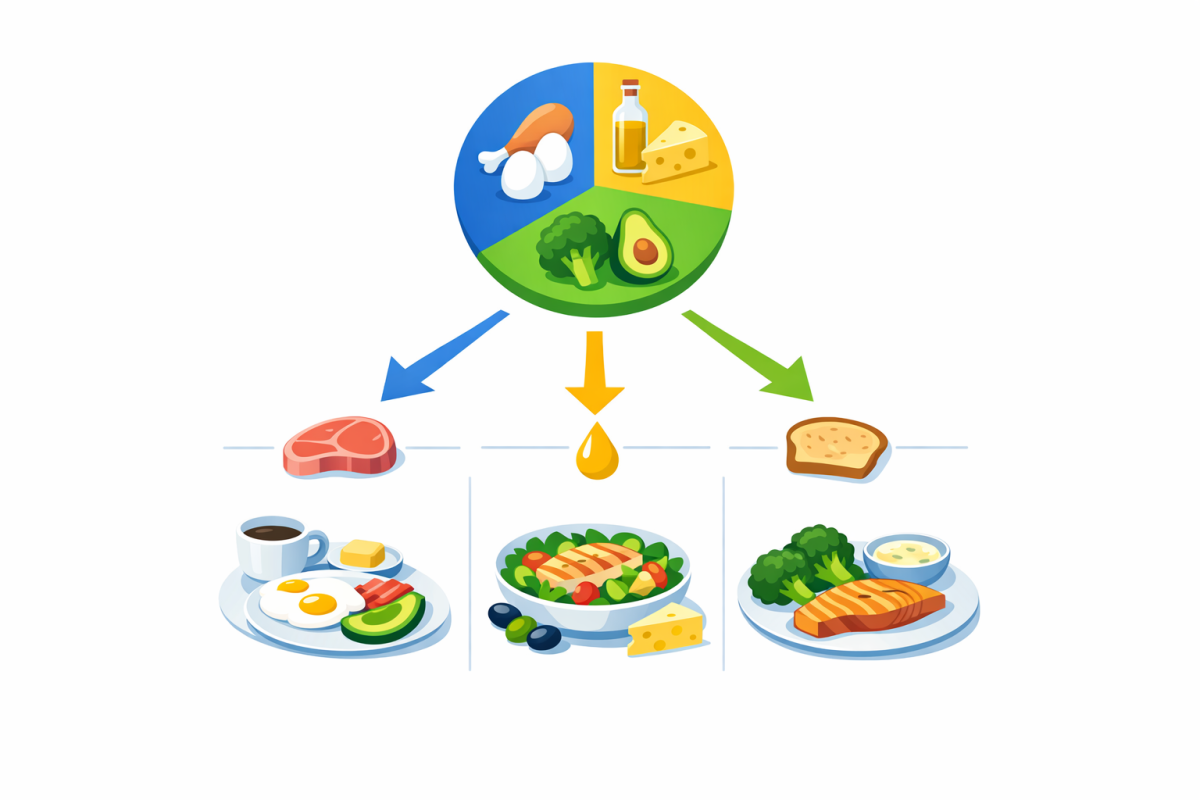
Why Recipe Structure Matters For Hitting Macros
Well‑designed ketogenic recipes:
- Center meals around sufficient protein, not just added fat
- Keep net carbs predictable and trackable
- Allow easy scaling up or down to match your macros
- Use ingredients your family will actually eat, so you are not cooking separate meals
CTA: Get Plug‑And‑Play Meals That Match Your Macros
Dialing in your macros is step one. Step two is having a library of recipes that actually match those macros, so you are not doing macro math before every meal.
KetoDietRecipes.org provides:
- Clearly labeled macros per serving for protein, net carbs, fat, and calories
- Filters for goals like “fat loss,” “high protein,” “family‑friendly,” and “quick weeknight meals”
- Meal ideas you can slot directly into your daily targets from any keto macros calculator
If you already know your numbers but struggle to hit them consistently, it is far easier to start with recipes built for your goal instead of improvising at every meal.
Putting Your Keto Macros Into Daily Practice
To make your keto macros calculator work for you:
- Enter your data honestly and choose conservative activity levels
- Lock in protein and carb targets, then adjust fat to create an appropriate deficit
- Translate numbers into repeatable meals using tracking apps and macro‑friendly recipes
- Recalculate every 8–12 lb lost and tweak macros based on energy, performance, and progress
When you treat the calculator as a living tool instead of a one‑time setup, you turn keto from a confusing experiment into a predictable system for fat loss.
Frequently Asked Questions
How accurate are keto macros calculators for fat loss beginners?
Keto macros calculators are good starting points, not perfect predictions. They estimate your calorie needs, then allocate protein, carbs, and fat based on standard formulas. Individual metabolism, hormone status, and daily movement all affect results. Use the calculator to set initial targets, then track progress for 3–4 weeks. If weight and measurements are not changing, adjust calories slightly and reassess rather than assuming the calculator is “wrong” or that keto does not work for you.
How fast should I lose weight using keto macros?
A sustainable target is 0.5–1.0 percent of your body weight per week. For a 200 lb person, that is about 1–2 lb weekly. Faster loss can occur in the first 1–2 weeks due to water shifts from lower carbs. After that, extremely rapid loss often means the deficit is too aggressive, which increases the risk of muscle loss, fatigue, and rebound weight gain. If you are consistently losing more than 2 lb per week beyond week two, consider slightly increasing calories.
Do I need to hit my fat macros exactly every day?
No. Protein and carb targets are higher priority. On keto, fat is primarily a lever to adjust calories. Being under your fat target is fine if you are satisfied and hitting protein. Being significantly over your fat target, especially through snacks and “keto treats,” can stall fat loss. Aim to be within roughly 10–15 g of your fat target most days, and focus more on consistent weekly averages than perfection every single day.
Can I do keto for fat loss without tracking macros?
Some people can, especially if they are starting from a very high‑carb diet and simply cut sugar, grains, and ultra‑processed foods. However, for predictable fat loss, especially if you have a history of yo‑yo dieting or a sedentary job, tracking macros at least for the first few weeks is extremely helpful. It teaches portion sizes, reveals hidden carbs, and shows you how protein, fat, and carbs add up. Once you understand your usual meals, you can often transition to a more intuitive approach.
Should I change my macros on workout days?
Many beginners can use the same macro targets on both workout and rest days and still see good results. If you train hard or frequently, slight adjustments can help. Common strategies include keeping weekly calories the same but shifting a bit more of your carbs to pre‑ and post‑workout, or having slightly higher calories on training days and slightly lower on rest days. The key is to keep your weekly calorie average aligned with your fat loss goal while timing food to support performance and recovery.