
Why Electrolytes Matter So Much On Keto
If you feel exhausted, foggy, crampy, or “off” on keto, there is a strong chance it is not the carbs you miss, it is your electrolytes. When you cut carbohydrates, your insulin levels drop. That signals your kidneys to dump water and sodium, which then drags potassium, magnesium, and calcium out with it. The result is the classic “keto flu” that derails a lot of beginners and frustrates experienced low carb dieters.
Electrolyte supplementation can transform that experience. The right product keeps you hydrated, stabilizes energy, reduces headaches and muscle cramps, and helps performance in the gym or on long work days. The wrong one loads you with sugar, unnecessary fillers, or unbalanced mineral doses that do not address what keto actually changes.
This guide walks through what to look for, how much you likely need, what forms work best for different lifestyles, and specific “best for” scenarios so you can choose the best keto friendly supplements for electrolytes with confidence.
Core Electrolyte Needs On A Ketogenic Diet
Before comparing products, it helps to know what you are actually trying to replace and in what ballpark amounts.
Key electrolytes and target daily ranges
These are typical evidence‑based ranges for adults on a low carb or ketogenic diet, assuming normal kidney function and no medical contraindications. Always confirm with your healthcare provider if you have blood pressure, kidney, or heart issues.
| Electrolyte | Typical keto-friendly daily range | Primary roles on keto |
|---|---|---|
| Sodium | 3,000 to 5,000 mg (total, diet + supplements) | Blood pressure, fluid balance, nerve function, performance |
| Potassium | 2,000 to 3,000 mg (diet + supplements) | Muscle contraction, heart rhythm, energy, reduces cramps |
| Magnesium | 300 to 400 mg (diet + supplements) | Relaxation, sleep, muscle and nerve function, blood sugar |
| Calcium | 800 to 1,200 mg (diet + supplements) | Bones, muscle contraction, heart function |
Key Takeaway: Most keto side effects come from sodium and magnesium losses in the first place. If you only “sip more water” without replacing salt and magnesium, symptoms often get worse, not better.
Keto specific challenges with electrolytes
Keto dieters, especially in the first 4 to 8 weeks, face unique issues:
- Increased urine output, which accelerates electrolyte loss
- Often lower intake of potassium rich fruits and starchy vegetables
- Heavy coffee consumption, which has mild diuretic effects
- Intense training while glycogen stores are lower, which demands more sodium and potassium
This is why a generic “sports drink” that targets carb fueled endurance athletes rarely matches what you need on a low carb lifestyle.
What Makes An Electrolyte Supplement Keto Friendly
Not all electrolyte blends are designed for ketogenic diets. When you scan a label, use this checklist to separate true keto friendly options from smartly branded sugar water.
Carbs, sweeteners, and fillers
Look for:
- Total carbs: ideally 0 to 2 grams per serving
- No added sugar: avoid sucrose, glucose, maltodextrin, or dextrose
- Sweeteners: stevia, monk fruit, or very small amounts of erythritol are usually fine for most people
- Avoid: maltodextrin and hidden starches, which spike blood sugar more than table sugar gram for gram
A “hydration mix” with 10 to 20 grams of sugar belongs in a carb loading strategy, not in a ketogenic plan.
Electrolyte balance and forms
Better keto friendly products will:
- Provide at least 500 to 1,000 mg sodium per serving
- Include both sodium and potassium, not just sodium
- Include 100 to 200 mg magnesium per serving, often as magnesium citrate, malate, or glycinate, which are more absorbable than oxide
- Use mineral salts such as sodium chloride and potassium citrate rather than exotic “proprietary complexes” with tiny actual mineral content
Pro Tip: If a product does not list actual milligrams of sodium, potassium, and magnesium on the label, skip it. Vague “proprietary blends” usually mean underdosed minerals.
Flavor, convenience, and tolerance
Especially for busy professionals, parents, or athletes, what you can take consistently is more valuable than the “perfect” formula you forget to use.
- Powders are ideal if you like flavored water and want flexible dosing
- Tablets or capsules are ideal if you travel or dislike flavored drinks
- Check for GI tolerance by starting with half servings, especially if you are sensitive to magnesium or sugar alcohols
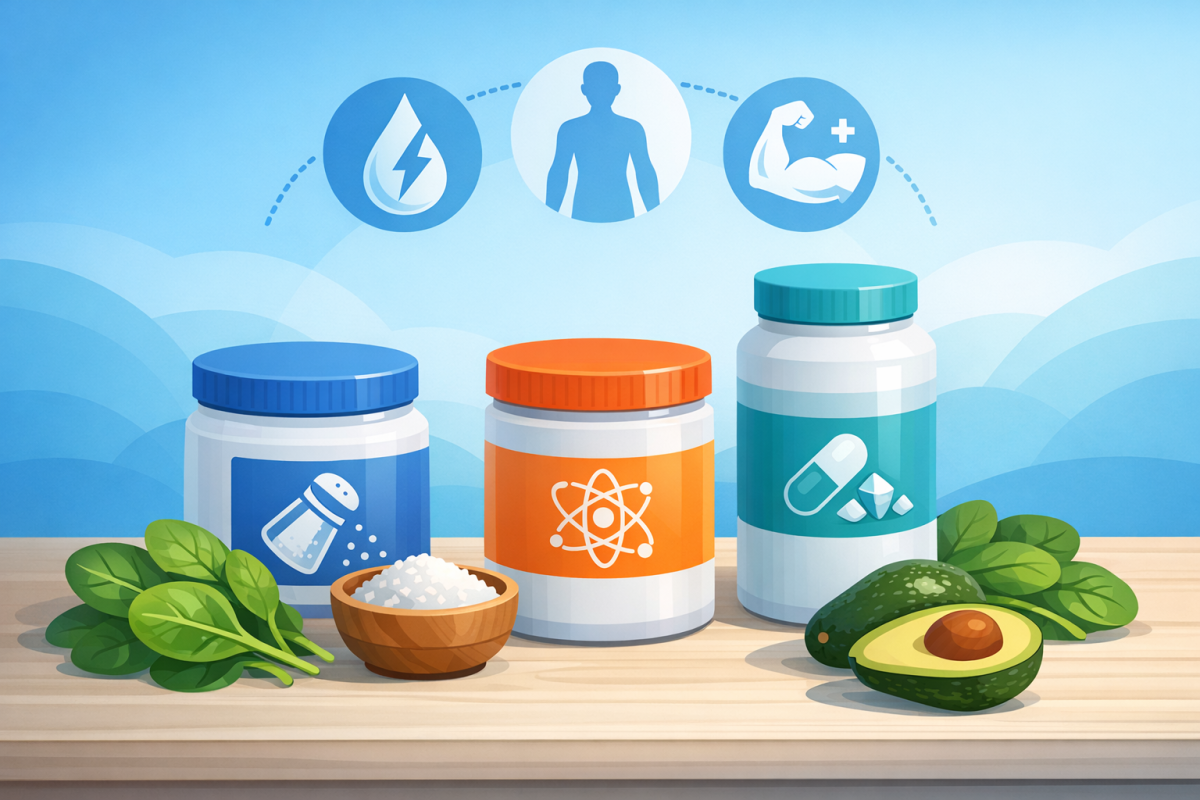
A clean, modern illustration of a ketogenic dieter comparing two electrolyte supplement labels, highlighting sugar content and electrolyte numbers.
Comparing Types Of Keto Friendly Electrolyte Supplements
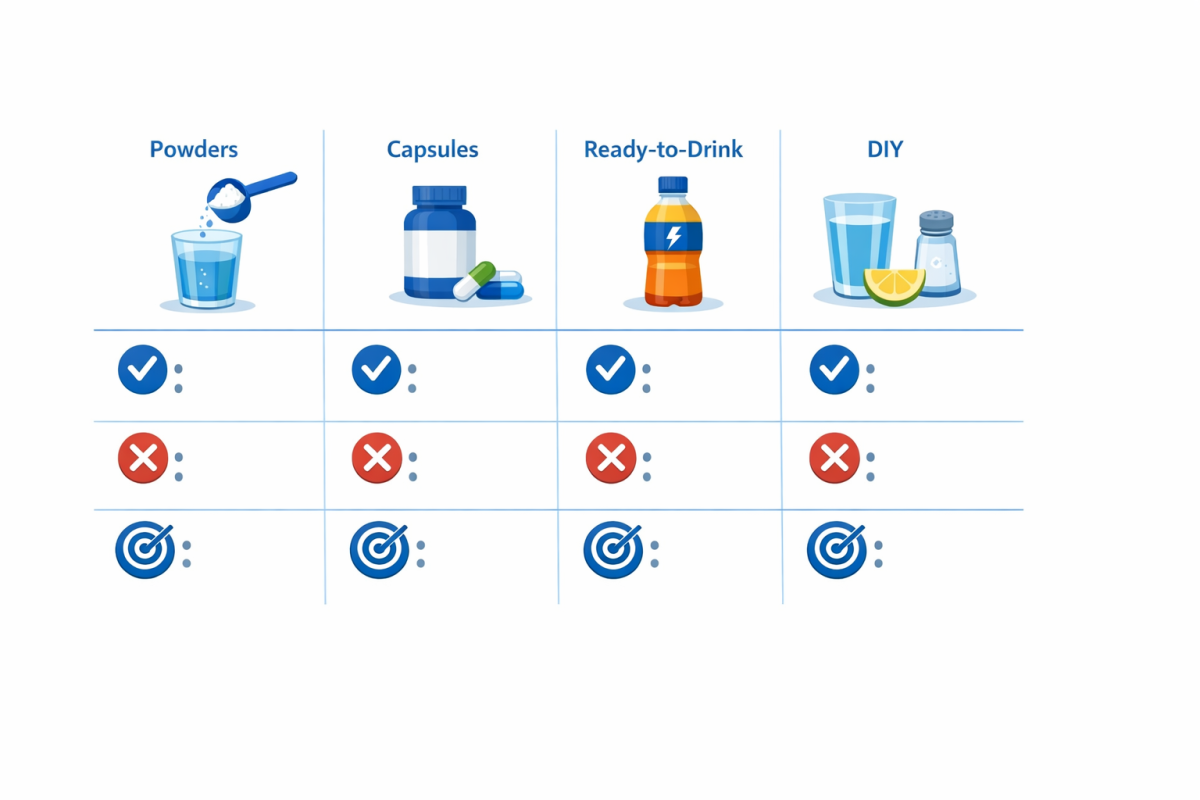
Different formats suit different lifestyles and use cases. Here is how powders, capsules, ready to drink options, and “DIY” strategies stack up.
Powders and drink mixes
Best for: Most users, especially beginners and athletes.
Pros:
- Easy to get clinically useful doses of sodium and magnesium
- Faster absorption, since you drink them in solution
- Flavors can encourage higher fluid intake
- Dosing is flexible, you can use half scoops or add an extra serving on high sweat days
Cons:
- Some formulas are too sweet or use sugar alcohols that cause bloating
- Less convenient when traveling or in meetings
Ideal if you train early in the morning, have demanding work days, or are prone to headaches and cramps.
Capsules and tablets
Best for: Professionals on the go, frequent travelers, people who dislike flavored drinks.
Pros:
- Easy to carry and dose discreetly
- Usually free of sweeteners and flavors
- You can split doses across the day to support more stable levels
Cons:
- Need multiple capsules to reach effective sodium and potassium doses
- Slower hydration effect compared with a drink
- Higher risk of forgetting to drink enough plain water
This format is practical for meetings, travel days, or parents who do not want colorful drinks around kids.
Ready to drink electrolyte beverages
Best for: Convenience, occasional use, emergencies.
Pros:
- No mixing required, ideal when you feel “keto flu” symptoms coming on
- Useful post workout, after sauna, or on very hot days
- Portion controlled
Cons:
- Keto friendly options are more expensive per serving
- Many mainstream brands contain sugar or unnecessary carbs
- Less flexible dosing
Use these when you are caught without your usual powder or when you want a “safety net” option in the fridge.
DIY electrolyte strategies
Some experienced keto dieters “build their own” electrolyte plan. For example:
- Salting food more aggressively
- Sipping homemade “ketoade” with water, a pinch of salt, a squeeze of lemon, and a magnesium supplement
- Eating potassium rich low carb foods such as avocado, leafy greens, and salmon
This can work well once you understand your needs and symptoms, but it is less precise than a balanced supplement.
Best For Different Keto Lifestyles And Goals
Different audiences have different constraints. Here is how to match product type and formula to your situation.
Best electrolytes for beginners with “keto flu”
Beginners who feel:
- Headachy in the afternoon
- Lightheaded when standing
- Foggy at work
- Crampy at night
usually need more sodium and magnesium quickly.
Look for:
- A powder with around 800 to 1,000 mg sodium per serving
- At least 100 mg magnesium, ideally citrate or glycinate
- Minimal or no sugar, light natural flavors
A practical protocol for the first two weeks:
- 1 serving of electrolyte powder in the morning
- 0.5 to 1 additional serving mid afternoon if symptoms appear
- Extra pinch of salt on meals, especially if you have low blood pressure
If you have high blood pressure or are on medication, confirm with your clinician before significantly increasing sodium.
Best electrolytes for busy professionals and parents
If your day is full of meetings, commuting, or childcare, simplicity wins.
Good options:
- Capsule based products with balanced sodium, potassium, and magnesium
- Individual stick pack powders that you can keep at the office or in your bag
Practical routine:
- Take capsules with your first water of the day
- Keep a second dose or a stick pack in your laptop bag “just in case”
- Pair with naturally salty foods at lunch, such as olives or broth
The goal is fewer decisions and less thinking, which improves long term consistency.
Best electrolytes for athletes and gym focused keto dieters
If you lift, run, cycle, or do CrossFit, your electrolyte demands are higher, especially for sodium and potassium.
Look for:
- Powders that provide at least 1,000 mg sodium and 200 to 400 mg potassium per serving
- Low or zero carbohydrate formulas if you need to stay in strict ketosis
- Optionally, products with added taurine or small amounts of creatine for performance, as long as carbs remain low
Timing strategy:
- 0.5 to 1 serving about 30 minutes before training
- 0.5 to 1 serving during or immediately after, depending on sweat loss and workout duration
Expert Insight: Many low carb athletes perform better with higher sodium intakes, often 4,000 to 6,000 mg daily, especially in hot climates. This level must be individualized with medical oversight if you have any cardiovascular concerns.
Best budget friendly choices
Electrolyte support does not need to be expensive.
Budget approaches:
- Simple powder products with transparent labels and no “proprietary blends”
- Bulk magnesium glycinate or citrate powder, combined with table salt and potassium rich foods
- Occasional use of no sugar added, store brand hydration powders
You can often build solid electrolyte coverage for under 30 cents per serving with careful brand selection and some DIY support through food.
An illustration of three personas (beginner keto dieter, busy professional, and athlete) each holding a different type of electrolyte supplement suited to their lifestyle.
Safety, Dosing, And How To Adjust Over Time
Electrolytes are essential nutrients, but more is not always better. Intelligent dosing matters.
General dosing guidelines
Use the table below as a practical starting point for most healthy adults on keto.
| Goal / Situation | Sodium (diet + supps) | Magnesium (total) | Notes |
|---|---|---|---|
| Keto beginner, low activity | 3,000 to 4,000 mg | 300 to 350 mg | Focus on consistent daily intake |
| Active, moderate training | 4,000 to 4,500 mg | 350 to 400 mg | Increase on hot or high sweat days |
| Heavy sweaters / intense athletes | 4,500 to 5,000+ mg | 350 to 450 mg | Work with clinician if sustained |
Always count food sources as well, especially if you eat a lot of cured meats, broth, or cheese.
Signs you might need more electrolytes
Common clues:
- Persistent headaches around the same time each day
- Dizziness standing up
- Muscle cramps at night or during workouts
- Heart palpitations or irregular heartbeat (this also warrants medical evaluation, not just supplementation)
- Unusual fatigue that improves quickly after a salty drink
If symptoms improve within 30 to 60 minutes of a serving of a balanced electrolyte mix, that is useful feedback.
When to be cautious or seek medical guidance
You should speak with a healthcare provider before aggressive electrolyte supplementation if you:
- Have kidney disease or reduced kidney function
- Take blood pressure medications, diuretics, or heart rhythm drugs
- Have a history of heart failure or serious arrhythmias
- Are pregnant, breastfeeding, or planning pregnancy
Warning: Do not self treat serious symptoms such as chest pain, shortness of breath, extreme weakness, or fainting with electrolyte supplements alone. Those require urgent medical evaluation.
How Keto Electrolytes Fit Into Your Overall Plan
Electrolyte supplements work best as part of a coherent keto strategy, not as a bandaid on poor habits.
Combine electrolytes with smart hydration
For most adults on keto:
- Aim for roughly 2 to 3 liters of fluid per day, including water, herbal tea, and electrolyte drinks
- Increase on training days, in hot climates, or if you are tall or heavily muscled
- Sip steadily across the day rather than “chugging” large amounts at once
Too much plain water without minerals can dilute electrolytes and worsen symptoms.
Use food to support your supplement
Keto friendly, electrolyte supportive foods include:
- Sodium: broth, soups, salted meats, pickles, olives
- Potassium: avocado, spinach, Swiss chard, mushrooms, salmon
- Magnesium: pumpkin seeds, almonds, spinach, dark chocolate (85 percent cocoa or above)
Supplements then “top up” what your food does not provide, rather than replacing it entirely.
Turn Electrolyte Knowledge Into Keto Friendly Meals
A lot of people hit their electrolyte targets in a more enjoyable, sustainable way when they plan meals with electrolytes in mind.
For example:
- A lunch salad with avocado, spinach, olives, and grilled salmon covers potassium, magnesium, and sodium
- A salted bone broth or miso style soup as an afternoon snack can replace a headache‑triggering energy dip
- An evening meal with leafy greens, nuts, and a magnesium rich dessert such as high cocoa dark chocolate supports sleep and recovery
This is where a strong recipe resource becomes valuable.
How KetoDietRecipes.org Can Help
If you want practical recipes that fold electrolyte rich, keto friendly ingredients into everyday meals, KetoDietRecipes.org is designed for exactly that. You can:
- Search for recipes that use avocado, leafy greens, nuts, and broth to naturally boost electrolytes
- Filter by family friendly, quick prep, or athletic performance focus so your meals match your real life
- Build weekly plans that align your macros and electrolytes instead of juggling them separately
You will find ideas that go far beyond bacon and eggs, which helps you stay consistent and feel better long term.
Learn more
Your Next Steps For Dialed In Keto Electrolytes
If you often feel flat, crampy, or foggy on keto, start by tightening up your electrolyte plan.
- Choose a keto friendly electrolyte product that fits your lifestyle, powder for flexibility, capsules for convenience, or a combination.
- Aim for appropriate daily sodium and magnesium ranges, then adjust based on symptoms, sweat, and medical advice.
- Support your supplements with electrolyte rich, low carb foods and coherent hydration habits.
Once your electrolytes are in place, you will usually find that energy, mental clarity, workouts, and weight loss all become more predictable and sustainable.
Frequently Asked Questions
How soon will electrolyte supplements help my keto flu symptoms?
Many people notice improvements in headaches, lightheadedness, and fatigue within 30 to 60 minutes of taking a well‑dosed electrolyte drink, especially if they were significantly deficient. However, if you have been under consuming electrolytes for days, it can take 24 to 72 hours of consistent intake to fully stabilize how you feel. If symptoms remain severe or unusual, seek medical advice rather than assuming electrolytes are the only issue.
Can I get enough electrolytes from food alone on keto?
It is possible but less common, especially in the first weeks of keto or if you train hard. You would need to consistently eat salty broths, avocado, leafy greens, nuts, seeds, and fatty fish in structured amounts. For busy professionals, parents, and athletes, supplements provide a reliable baseline. A combined approach, electrolyte supportive food plus a targeted supplement, is usually the most practical and sustainable.
Are electrolyte powders with caffeine good for keto?
Caffeinated electrolyte powders can be useful before workouts or on demanding work days, but they are not ideal as your primary hydration source. Caffeine is mildly diuretic for some people, which can slightly increase fluid loss. If you use a caffeinated product, limit it to 1 serving daily and rely on non caffeinated electrolytes and water for the rest. Anyone with anxiety, insomnia, or heart rhythm issues should be cautious.
How do I know if I am taking too much sodium on keto?
Signs of excessive sodium can include persistent thirst, swelling in hands or feet, and rising blood pressure in susceptible individuals. However, for many healthy, active keto dieters, 3,000 to 5,000 mg daily is well tolerated, because low insulin and higher sweat losses change sodium handling. The safest approach is to monitor blood pressure, note symptoms, and work with a clinician, especially if you already have cardiovascular or kidney conditions.
Do I need separate magnesium supplements if my electrolyte mix includes magnesium?
It depends on the dose and your symptoms. Many electrolyte mixes include 50 to 100 mg of magnesium, which is helpful but usually below the 300 to 400 mg total daily target. If you experience muscle cramps, poor sleep, or constipation, you may benefit from an additional dedicated magnesium supplement, such as 150 to 250 mg of magnesium glycinate at night. Always factor in total magnesium from all sources to avoid excessive intake.