
Why Whey Protein And Keto Can Work Together
Whey protein can absolutely fit into a ketogenic diet, as long as you choose the right type and manage total carbs. The main concern is not the protein itself, but the lactose and added sugars that often come with commercial whey products. These can quietly push you over your daily carb limit, stall weight loss, and create blood sugar swings.
For busy professionals, parents, athletes, or anyone using keto for fat loss or metabolic health, whey can be a very practical tool. It offers fast-digesting, high quality protein that supports lean muscle, recovery, and satiety, which are all critical on a lower calorie or low carb plan.
The key is to treat whey as a precisely measured ingredient, not a “free” health food. Once you understand labels, serving sizes, and how whey affects your personal blood sugar and appetite, it can become one of the most efficient tools in a well-constructed ketogenic lifestyle.
Key Takeaway: Whey protein is keto compatible when you choose low carb formulations and count every gram of carbohydrate toward your daily limit.
Understanding Whey Protein Macros On Keto
How Whey Fits Into Keto Macros
Most ketogenic approaches fall into the following macro ranges:
- Fat: roughly 65 to 75 percent of total calories
- Protein: roughly 20 to 30 percent of total calories
- Net carbs: usually 20 to 50 grams per day for most adults
Whey is almost pure protein with some residual carbs and a small amount of fat. The main questions are:
- How much protein do you personally need?
- How many carbs does each scoop of your whey contain?
For most active adults on keto, daily protein needs range from 1.4 to 2.0 grams per kilogram of body weight. For a 75 kg person, that is roughly 105 to 150 grams of protein per day. A single scoop of whey usually provides 20 to 25 grams toward that target, which makes meeting protein needs simple.
Carb Content By Whey Type
Different forms of whey can vary dramatically in carbohydrate content. Here is a comparison:
| Whey Type | Typical Protein (per 30 g) | Typical Carbs (per 30 g) | Keto Suitability |
|---|---|---|---|
| Whey concentrate | 20–24 g | 3–6 g | Sometimes, if carbs are managed |
| Whey isolate | 24–27 g | 0–3 g | Generally very keto friendly |
| Whey hydrolysate | 24–27 g | 1–4 g | Usually keto friendly, check label |
| Mass gainer blends | 15–25 g | 20–60 g | Not keto friendly |
For strict keto at 20 to 30 grams of net carbs per day, many people aim for no more than 1 to 3 grams of carbs per scoop of whey.
Pro Tip: If a “protein powder” tastes like dessert, it probably contains more carbs than you want on keto. Always read the actual carb number instead of trusting front-label claims.
Choosing The Right Whey Protein For Ketogenic Diets
What To Look For On The Label
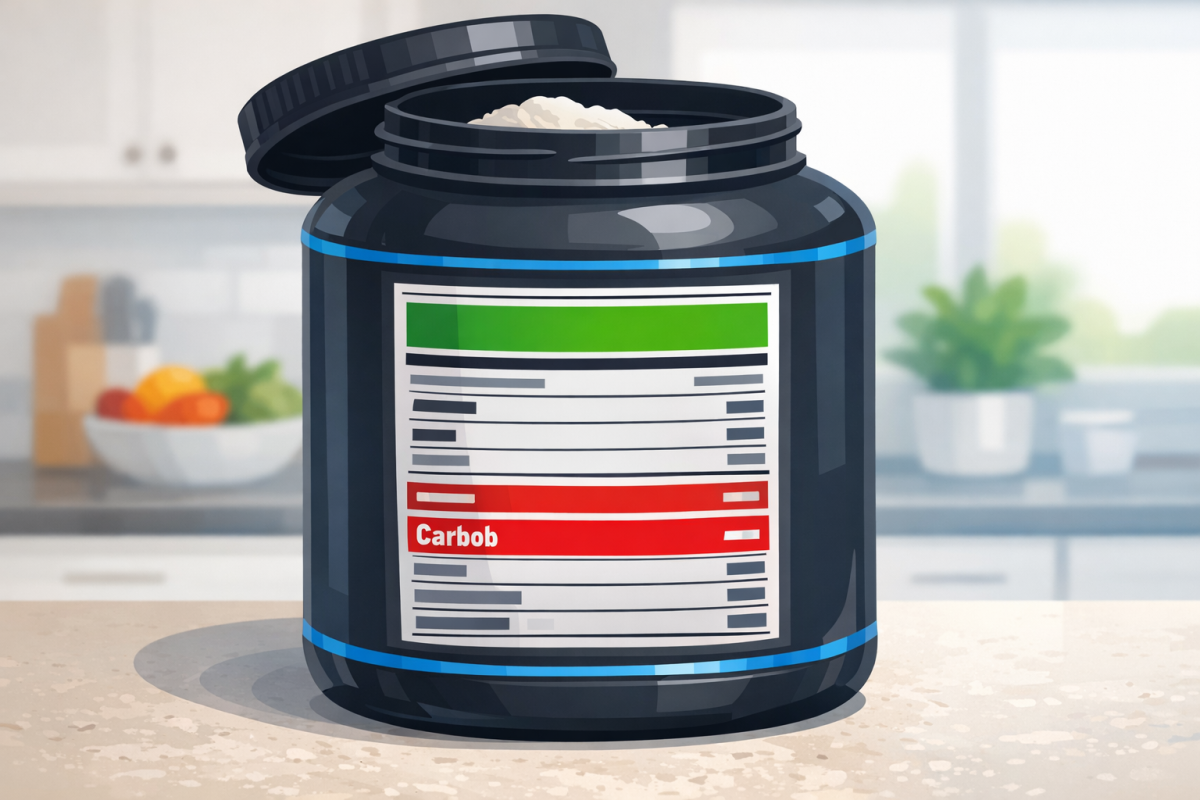
When you pick up a tub of whey protein, scan these items first:
- Serving size in grams
- Total carbohydrates per serving
- Added sugars and sweeteners
- Fiber and sugar alcohols
- Protein content per serving
For most keto approaches, a high quality whey product should:
- Provide at least 20 grams of protein per serving
- Contain no more than 3 grams total carbs per serving, ideally less
- Have no added sugar, maltodextrin, or dextrose
- Use calorie free sweeteners that you tolerate, such as stevia or monk fruit
Best Types Of Whey For Keto
In general:
- Whey isolate is usually the safest bet for very low carb, especially for people who are lactose sensitive.
- Whey concentrate can work if it is filtered well and low in carbs, but labels vary widely.
- Hydrolyzed whey digests quickly, which suits athletes, although the taste and price can be less friendly.
If you are managing blood sugar or using keto for metabolic health, prioritize ultra low carb isolates that list 0 to 1 gram of carbs per serving.
Ingredients To Avoid
Look for and avoid:
- Sugar, cane sugar, brown rice syrup
- Maltodextrin or dextrose
- “Creamer” blends that use corn syrup solids
- Artificial flavors that are paired with added sugar
These ingredients do not automatically make a product “off limits”, but they often signal that the powder is designed for taste, not carb control.
How To Use Whey Protein Without Breaking Ketosis
Step-By-Step: Adding Whey To Your Day
A practical approach:
-
Calculate your daily protein target.
For most keto dieters focused on fat loss and muscle maintenance, use 1.4 to 1.8 g/kg of body weight. -
Decide how much you prefer from whole foods.
Many people aim to get 70 to 80 percent of their protein from meat, eggs, and fish, then fill the gap with whey. -
Assign a specific whey “budget.”
For example, if you need 120 g of protein per day and plan for 90 g from food, you can use 1 to 2 scoops of whey to cover the remaining 30 g. -
Count the carbs from whey toward your daily limit.
If your powder has 2 g carbs per scoop and you use 2 scoops, that is 4 g of your 20 to 30 g carb budget.
Timing For Different Goals
-
Weight loss and appetite control:
Use whey strategically between meals or as part of breakfast to boost satiety. Pair it with fat, such as heavy cream or nut butter, to slow digestion and avoid blood sugar spikes. -
Athletic performance and recovery:
Use a scoop of whey within 1 to 2 hours after training, paired with some fat or a small portion of low glycemic carbs if you follow a targeted keto approach. -
Busy schedules or travel:
Keep single-serve packets in your bag or desk so you always have a keto friendly protein source when options are limited.
Key Takeaway: Whey is a tool, not a default snack. Decide when it helps you most, and integrate it intentionally into your daily macro plan.
Common Mistakes When Using Whey On Keto
Treating Whey As “Free” Protein
Many keto dieters track carbs but underestimate protein and total calories. This can lead to two problems:
- Exceeding protein targets consistently, which for some people may reduce ketone levels and stall fat loss.
- Overeating calories through multiple shakes that feel “light”, even when each serving contains 120 to 180 calories.
Use a tracking app for at least 1 to 2 weeks when you introduce whey. Confirm that you stay within your intended calorie and protein ranges.
Ignoring Carbs From Flavored Powders
Flavored whey can easily hide 4 to 7 grams of carbs per scoop from lactose and added flavoring agents. If you use two generous scoops, you might be consuming 10 to 14 grams of carbs without realizing it, which is half or more of a strict daily allowance.
Always log the exact brand and flavor, not just “whey protein”.
Building Shakes That Are Secretly High Carb
Some otherwise keto aware people add:
- Banana, mango, or large amounts of berries
- Oat milk or sweetened almond milk
- Flavored coffee syrups or honey
This can turn a 2 gram carb scoop of whey into a 25 to 40 gram carb smoothie.
For a ketogenic shake, base your blend on:
- Water, unsweetened almond milk, or coconut milk
- Nut butter in measured amounts
- Heavy cream or full-fat Greek yogurt, in small portions
- A small serving of low carb berries, measured carefully if you include them
Practical Whey Protein Ideas For Different Lifestyles
For Busy Professionals And Parents
If your day is packed with meetings, commutes, or childcare, whey can provide protein stability in 30 seconds. Some practical uses:
- Morning “insurance” shake with whey, unsweetened almond milk, and a spoon of peanut or almond butter
- Mid-afternoon shake to prevent the 3 p.m. vending machine run
- Emergency “dinner add on” when your family meal is low in protein
Real-World Example: A busy parent on 25 grams of daily carbs uses one scoop of whey isolate in the morning and another post-workout. Each scoop contains 23 g protein and 1 g carb, so total whey intake contributes 46 g protein and 2 g carbs, which fits cleanly inside their macros.
For Athletes And Fitness Enthusiasts
If you train with resistance, high intensity intervals, or endurance sports while on keto, your protein needs are often at the higher end of the range. Whey makes it easier to:
- Hit 1.8 to 2.0 g/kg of body weight
- Support recovery on lower calorie cutting phases
- Avoid muscle loss while in a calorie deficit
Many athletes use whey:
- Pre-workout, if they train early and do not have time for a full meal
- Post-workout, as a fast digesting protein source, sometimes with a very small, targeted carb dose if that fits their strategy
For Gluten-Free Or Metabolic Health Focus
Most pure whey products are gluten free, although you must always verify cross contamination risks on labels. For those managing metabolic syndrome, prediabetes, or type 2 diabetes, whey can be useful because:
- It provides protein with minimal impact on blood sugar, if low carb
- It helps maintain lean mass during weight loss, which improves insulin sensitivity
- It can replace higher carb breakfast options like cereal, toast, or fruit-heavy smoothies

Sample Keto-Friendly Whey Recipes
Simple Keto Whey Shake
- 1 scoop whey isolate (0 to 2 g carbs)
- 250 ml unsweetened almond milk
- 1 tablespoon almond butter
- Ice cubes
Blend until smooth. This typically yields:
- 25 g protein
- 12 to 18 g fat
- 3 to 4 g net carbs
Ideal as a breakfast or snack that fits most keto plans.
Thick “Dessert” Protein Pudding
- 1 scoop chocolate whey isolate
- 50 g full-fat Greek yogurt
- 2 tablespoons heavy cream
- Splash of water if needed
Stir vigorously until thick and creamy, then chill for 10 to 15 minutes. This can replace a high sugar dessert, with:
- Strong protein content
- High satiety from fat
- Usually 4 to 6 g net carbs, depending on yogurt choice
Key Takeaway: You do not need complex recipes. A few simple combinations used consistently provide most of the benefit of whey on a ketogenic diet.
Using Whey Protein And Keto Meal Planning Tools
If you want whey to work for you, it must integrate cleanly into your overall meal patterns. That is where structured recipes and realistic meal plans matter.
KetoDietRecipes.org curates keto recipes that already reflect appropriate macro ratios, including:
- Shakes and smoothies designed with low carb whey
- High protein, moderate fat meals for athletes and active parents
- Options that account for gluten sensitivity and family friendly preferences
Instead of guessing if a shake or meal keeps you in ketosis, you can start from recipes that have been predesigned for low carb thresholds. This is especially useful during your first months on keto, or when you increase training and need to fine tune protein intake without accidentally raising carbs.
If you want to see how whey based shakes can be slotted into full day meal plans, including lunches and dinners that balance out your macros:
KetoDietRecipes.org has tools and recipes that help you do exactly that. Learn more
Putting It Into Practice
Using whey protein on a ketogenic diet comes down to three decisions: choosing a low carb product, assigning it a specific place in your macro budget, and tracking your personal response. If you respect the carb content of each scoop and avoid treating shakes as unlimited snacks, whey can help you preserve muscle, improve satiety, and simplify daily eating.
Start with one serving per day, log it carefully, and adjust based on hunger, performance, and progress. Combine it with whole food protein sources, smart fats, and low carb vegetables, and you have a sustainable, flexible keto framework that fits real life, not just theory.
Frequently Asked Questions
Can whey protein kick me out of ketosis?
Whey protein itself does not contain enough carbohydrate to directly push you out of ketosis if you choose a low carb product. The risk comes from added sugars, lactose in higher carb concentrates, or high carb ingredients you mix into your shakes. Choose isolates with 0 to 2 g carbs per scoop and track them as part of your daily carb limit.
How many whey protein shakes can I have on keto?
Most people do best with 1 to 2 servings per day, depending on total protein needs and how much they eat from whole foods. If you rely on shakes for more than half of your daily protein, you may find satiety and digestion are not as good as when more protein comes from meat, eggs, or fish. Use whey to fill gaps, not to replace every meal.
Is whey or collagen better for a ketogenic diet?
Both can fit, but they serve different purposes. Whey is a complete protein with a strong anabolic effect, which makes it better for muscle maintenance and recovery. Collagen is incomplete, but supports connective tissue, skin, and joints. Many keto dieters use whey around training or as a primary protein source and add collagen separately for joint or skin benefits.
Can I use whey protein for keto baking?
Yes, whey protein can be used in keto baking to increase protein content and improve texture. It works well in low carb pancakes, muffins, and “bread” recipes. However, baking can slightly change digestibility and sometimes cause dryness, so follow recipes that are specifically tested for whey. Always factor in the carbs from the powder and any other ingredients.
What is the best time of day to take whey on keto?
The best timing depends on your goals and routine. For many people, using whey in the morning or post-workout is ideal. Morning shakes can stabilize appetite and prevent high carb choices, while post-workout servings support recovery. If you practice time restricted eating, align whey intake with your eating window and total protein goal rather than focusing on an exact clock time.