
Why A Simple 7 Day Keto Meal Plan Works For Beginners
An easy 7 day keto meal plan for beginners removes confusion so you can focus on eating, not overthinking. Instead of tracking every gram perfectly, you use a structured, low-carb template that keeps you under roughly 25 to 30 grams of net carbs per day, prioritizes protein, and uses healthy fats to keep you full.
For busy professionals, parents, and fitness enthusiasts, the goal of week one is not perfection. It is to stabilize hunger, cut obvious carbs such as bread and sugar, and learn what a keto plate actually looks like at breakfast, lunch, and dinner.
This guide gives you: a straightforward daily plan, a flexible shopping list, simple prep tips, and strategies to avoid the most common beginner mistakes. Use it as a framework, then adjust for appetite, schedule, and family preferences.
Key Takeaway: Your first 7 days of keto should be about structure and simplicity, not complex macros or gourmet recipes.
Core Principles Behind This 7 Day Beginner Keto Plan
Before you follow any meal plan, you need to understand why it works. This makes it easier to adapt when life gets messy, travel pops up, or the kids want something different.
Daily Macro Targets, Simplified
Instead of obsessing over exact grams, use these broad guidelines:
- Net carbs: ~20 to 30 g per day (net carbs = total carbs minus fiber and sugar alcohols)
- Protein: 0.7 to 1.0 g per pound of goal body weight, spread across meals
- Fat: Added to fullness, not forced, using butter, olive oil, avocado, and fattier meats
For many adults, this translates to:
- 2 to 3 meals per day
- 20 to 35 g protein per meal
- 5 to 10 g net carbs per meal, plus a low-carb snack if needed
Foods To Focus On
Build your plates around:
- Protein: eggs, chicken thighs, ground beef, salmon, tuna, Greek yogurt (full fat, unsweetened)
- Low-carb vegetables: spinach, broccoli, zucchini, cauliflower, bell peppers, lettuce, cucumbers
- Fats: olive oil, avocado, butter, ghee, mayonnaise, olives, nuts in moderation
- Flavor: herbs, spices, mustard, sugar-free hot sauce, lemon juice, vinegar
Foods To Avoid In Week One
Remove or sharply limit:
- Bread, tortillas, rice, pasta, cereal, granola
- Potatoes, sweet potatoes, corn, most crackers and chips
- Sugary drinks, fruit juice, desserts, candy, sweetened yogurt
- Most fruit, except small portions of berries
Pro Tip: When in doubt, prioritize protein first, then add low-carb vegetables, then add fat to taste. This order naturally keeps calories and hunger under control.
The Easy 7 Day Keto Meal Plan For Beginners
This plan assumes you are eating three meals per day, with an optional snack. Portions can be adjusted based on your appetite, size, and activity level. If you prefer two larger meals, combine breakfast and lunch into a single brunch-style meal.
Day 1: Gentle Low-Carb Start
- Breakfast: Scrambled eggs (2 to 3) cooked in butter with a handful of spinach, sprinkle of cheese
- Lunch: Turkey lettuce wraps with mayonnaise, cheese, and sliced cucumber
- Dinner: Bunless burger with side salad (leafy greens, olive oil, vinegar) and sliced avocado
- Optional snack: A small handful of almonds or 1 string cheese
Day 2: Building Routine
- Breakfast: Greek yogurt (unsweetened, full fat) with a few raspberries and chia seeds
- Lunch: Chicken salad made with mayonnaise, celery, and pickles, served over mixed greens
- Dinner: Baked salmon with roasted broccoli in olive oil
- Optional snack: Celery sticks with cream cheese
Day 3: Simple And Satisfying
- Breakfast: Omelet with mushrooms, peppers, cheese, and side of bacon
- Lunch: Tuna salad lettuce cups with olives
- Dinner: Chicken thighs roasted with zucchini and bell peppers, olive oil drizzle
- Optional snack: Half an avocado with salt and pepper
Day 4: Family-Friendly Flavors
- Breakfast: Egg muffins (eggs, cheese, spinach, and sausage baked in muffin tins, can batch-prep)
- Lunch: Leftover roasted chicken thighs chopped over salad with ranch dressing
- Dinner: Taco bowl, ground beef cooked with taco seasoning (no sugar), served on lettuce with cheese, sour cream, salsa (no added sugar)
- Optional snack: Cheese slices with a few walnuts
Day 5: Quick Options For Busy Days
- Breakfast: Boiled eggs with cherry tomatoes and a few cucumber slices
- Lunch: Deli meat roll-ups (ham or turkey, cheese, pickle spear inside) with a side salad
- Dinner: Pan-seared pork chops with cauliflower mash (cauliflower blended with butter and garlic)
- Optional snack: Pepperoni slices with a cheese stick
Day 6: Slight Variety Without Complexity
- Breakfast: Smoothie, unsweetened almond milk, protein powder (low carb), spinach, ice, and a tablespoon of peanut or almond butter
- Lunch: Egg salad with mayonnaise and mustard, served in lettuce wraps
- Dinner: Baked chicken drumsticks with roasted Brussels sprouts in olive oil
- Optional snack: A few olives and a small piece of cheese
Day 7: Practice For The Week Ahead
- Breakfast: Scrambled eggs with leftover taco meat and cheese
- Lunch: Salmon salad (canned salmon, mayo, celery, herbs) over spinach
- Dinner: Zucchini noodles with creamy Alfredo sauce and grilled chicken
- Optional snack: Greek yogurt with a few blueberries
[IMAGE: A top-view illustration of a 7 day keto meal prep layout, with labeled containers for breakfast, lunch, and dinner, featuring eggs, salads, meats, and veggies.]
Key Takeaway: Reusing ingredients such as eggs, chicken, ground beef, and leafy greens throughout the week dramatically cuts prep time and decision fatigue.
Shopping List For Your 7 Day Beginner Keto Plan
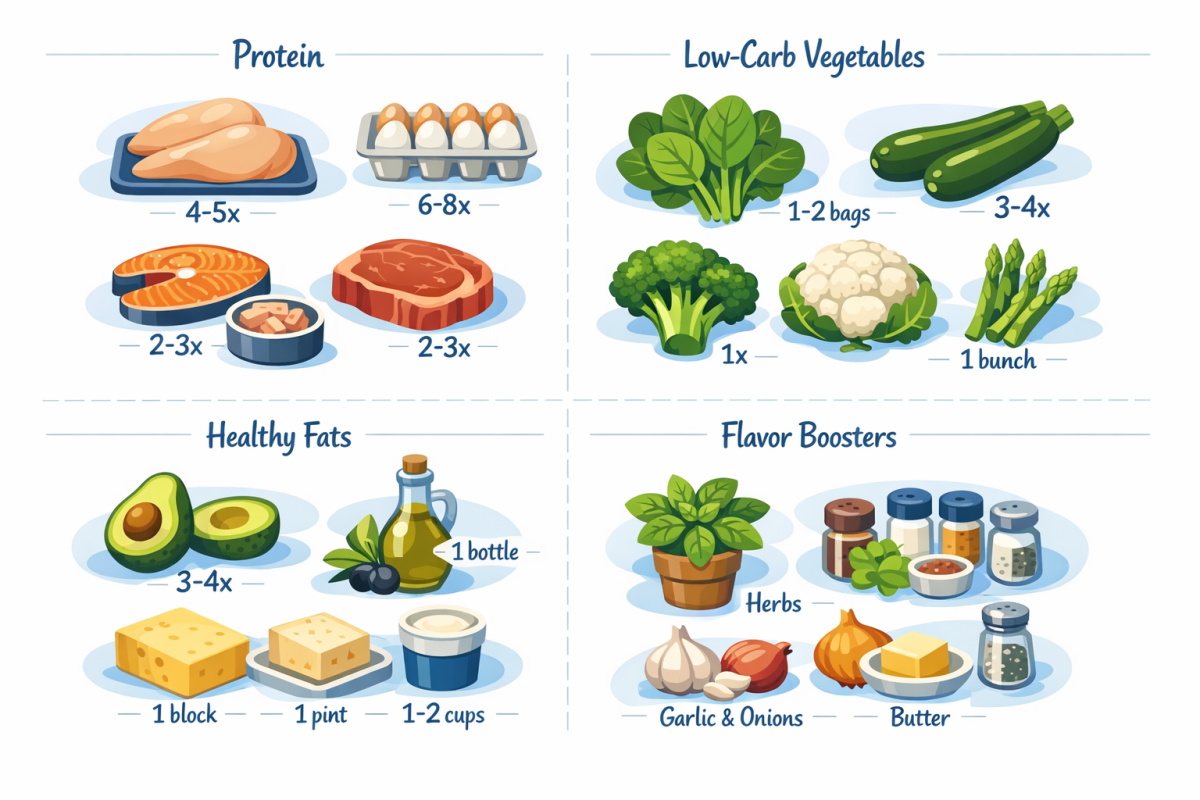
Use this list as a baseline. Quantities depend on household size, but most individuals can shop for the full week with one main trip.
Protein Staples
- Eggs, 2 to 3 dozen
- Chicken thighs or drumsticks, 2 to 3 pounds
- Ground beef, 2 pounds
- Salmon, fresh or frozen, 1 to 2 pounds, plus canned salmon or tuna
- Bacon or sausage, 1 to 2 packs (check labels for added sugar)
- Deli turkey or ham, nitrate-free if possible
- Full fat Greek yogurt, large tub
- Cheese: shredded, block, and string cheese
Vegetables And Greens
- Spinach or mixed greens, large containers
- Romaine or iceberg lettuce, whole heads for wraps and salads
- Broccoli, cauliflower, and zucchini
- Bell peppers and mushrooms
- Celery and cucumbers
- Brussels sprouts and cherry tomatoes
- Small pack of berries, raspberries or blueberries
Fats, Condiments, And Extras
- Butter or ghee
- Olive oil and avocado oil
- Mayonnaise (check for added sugar)
- Sour cream and cream cheese
- Olives and avocados
- Nuts, almonds or walnuts, in small bag
- Mustard, hot sauce, vinegar, salsa with no added sugar
- Low-carb protein powder (optional)
Important: Check labels for added sugar and starches in sauces, deli meats, and yogurt. These are hidden carb sources that often push beginners over their daily limit.
Meal Prep Tips To Make Your First Week Effortless
Even the best meal plan fails if it is too hard to execute. A bit of strategic prep on day zero can transform your entire week.
Batch Cook Key Proteins
- Bake a tray of chicken thighs or drumsticks for multiple lunches and dinners.
- Brown 2 pounds of ground beef with simple seasonings to use in taco bowls, breakfast scrambles, and stuffed peppers.
- Boil a dozen eggs for grab-and-go breakfasts and snacks.
This usually takes 60 to 90 minutes on a Sunday and saves you 20 to 30 minutes every weekday.
Pre-Chop And Pre-Wash Vegetables
- Wash and spin-dry lettuce and greens, store in containers with paper towel to absorb moisture.
- Slice bell peppers, cucumbers, and celery and keep in clear containers at eye level in the fridge.
- Rice cauliflower in a food processor or buy pre-riced to speed up mash or stir-fries.
Build Mix-And-Match Meals
With prepped ingredients, you can create:
- Salad bowls: protein + greens + dressing in 5 minutes
- Scrambles: eggs + leftover meat + veggies in 10 minutes
- Quick plates: deli meat rolls + raw veggies + cheese
[IMAGE: Illustration of a kitchen counter with containers of prepped keto ingredients (chopped veggies, boiled eggs, cooked meats) and a clock showing time saved.]
Pro Tip: Store cooked protein in portioned containers so you only reheat what you need. This helps with both freshness and portion control.
Managing Keto Flu, Hunger, And Energy In Week One
As your body shifts from burning carbs to burning fat, you may feel slightly off for a few days. This is normal and manageable if you plan ahead.
Preventing Keto Flu
Common symptoms include headache, fatigue, irritability, and light dizziness. Usually this comes from electrolyte loss and dehydration.
To reduce or avoid it:
- Drink 2 to 3 liters of water daily.
- Add 1 to 2 cups of broth or bouillon per day, or add 1/4 to 1/2 teaspoon of salt to water.
- Include potassium-rich low-carb foods, such as spinach and avocado.
- Do not crash your carbs overnight from 300 g to 20 g if you have severe symptoms. Step down over a few days if required.
Staying Full Without Overeating Fat
If you are hungry:
- Increase protein first, for example, add an extra egg or a few ounces of meat.
- Add more low-carb vegetables to create volume on your plate.
- Use fat to taste, but avoid drinking oils or adding butter to everything just to “hit your fat macros”.
Adjusting For Workouts And Busy Days
For fitness enthusiasts:
- Keep pre-workout meals light, such as Greek yogurt with a little nut butter, or eggs and a bit of cheese.
- Hydrate and salt more on training days, since sweat loss increases electrolyte needs.
- Expect 1 to 2 weeks before performance fully stabilizes at lower carb intake. Many people then report more stable energy during long sessions.
Key Takeaway: Most week-one discomfort is from electrolyte imbalance and sudden carb withdrawal, not from keto itself. Proper hydration and salt usually solve it.
Optional Tools And Resources To Stay On Track
You do not need advanced tools to follow this easy 7 day keto meal plan for beginners, but a few simple options can reduce guesswork and increase confidence.
Tracking, Testing, And Adjusting
- Use a free food tracking app for 3 to 5 days to learn typical carb values for your usual foods.
- Keto strips (urine) can show if you are producing ketones, although they are less useful long term.
- Track subjective markers: hunger, energy, focus, and cravings. These matter as much as the scale.
When To Consider Professional Guidance
If you are:
- Managing diabetes or taking blood pressure medication
- Pregnant or breastfeeding
- Recovering from an eating disorder
Consult a healthcare professional familiar with low-carb nutrition before making large dietary shifts.
Use KetoDietRecipes.org To Extend Your 7 Day Plan
Once you complete this easy 7 day keto meal plan, your biggest challenge becomes variety. Repeating the same meals works for some people, but many beginners quit because they get bored or their families will not eat the same few dishes.
This is where KetoDietRecipes.org becomes useful. Instead of starting from scratch every week, you can:
- Search for recipes that match the core principles in this article: high protein, low carb, simple ingredients.
- Filter options by meal type and difficulty so you can keep weekdays ultra simple and save creative meals for weekends.
- Turn individual recipes into new weekly rotations, for example, swapping salmon dinners for different fish or replacing taco bowls with keto casseroles.
If you found this 7 day plan helpful and want an easier way to build month-long rotations without blowing your carb budget, visit https://ketodietrecipes.org/ and Learn more about their recipe collections and planning tools.
Putting Your 7 Day Keto Meal Plan Into Practice
Your first week of keto does not have to be complicated, expensive, or extreme. Start with a simple structure, repeat ingredients, and focus on three wins:
- Keep carbs low by cutting obvious starches and sugar.
- Hit your protein at each meal so you stay satisfied.
- Use fats and vegetables to make meals enjoyable and sustainable.
After these 7 days, you will know which meals you enjoy, how your body responds, and where you need more variety. Use that insight to refine your next week rather than chasing perfection from day one.
Frequently Asked Questions
How many calories should I eat on this 7 day keto meal plan?
A good starting point is to eat until you are comfortably full at each meal, without forcing yourself to hit a specific calorie number. Most adults land between 1,400 and 2,000 calories, depending on size and activity. If weight loss stalls after a few weeks, then consider tracking intake for a few days to identify portions that may be too large.
Can I follow this 7 day keto meal plan if I am vegetarian?
Yes, with modifications. Replace meats with eggs, Greek yogurt, cottage cheese, tofu, and tempeh. Use more high-protein dairy and plant-based protein powders. Keep the same low-carb vegetables and fats. Be cautious with vegetarian proteins such as beans and lentils, which are higher in carbs and may need tighter portion control to remain keto friendly.
Is this easy 7 day keto meal plan safe for people with diabetes?
Many people with type 2 diabetes benefit from lower carb eating because it often reduces blood sugar and insulin needs. However, if you use insulin or glucose-lowering medications, you must work with your doctor when changing carb intake. Blood sugar may drop quickly, and medication doses may need adjustment. Never change prescribed medications without medical guidance.
Can I drink coffee, tea, or alcohol during this week?
Black coffee and unsweetened tea are fine. You can add a splash of heavy cream or unsweetened almond milk. Avoid sugar and most flavored creamers. For alcohol, it is best to skip it during the first 7 days so you can assess how your body adapts. Later, dry wine or spirits with sugar-free mixers can fit occasionally, but they can slow fat loss and lower inhibitions around food.
What if I feel too tired to exercise during the first week?
Mild fatigue is common as your body shifts fuel sources. Reduce intensity for 3 to 7 days, for example, walking instead of intense intervals or lifting lighter weights. Focus on hydration, electrolytes, and sleep. Most people find their energy returns, often more stable than before, once they adapt. If extreme fatigue persists or you feel unwell, consult a healthcare professional.