
Why Starting Keto Feels So Overwhelming
Starting keto sounds simple: cut carbs, eat more fat. In reality, many people hit information overload before they ever change a single meal. Carb counts, “net carbs,” electrolytes, keto flu, tracking apps, macros, conflicting advice, plus everyday life and family needs, all of this can turn a positive health decision into stress.
To start keto without feeling overwhelmed, you need three things: a clear definition of what “keto” actually is, a phased plan that you can follow in real life, and a short list of priorities so you know what to focus on first and what to ignore.
This guide is designed for busy professionals, parents, beginners, and health‑conscious individuals who want the benefits of keto, without turning it into a second full‑time job. You will get a practical, stepwise approach, realistic examples, and specific actions for the first 30 days.
Key Takeaway: Do not try to “learn everything keto” before you start. Learn only what you need for the next 7 days, then build from there.
The Simplest Way To Define Keto (So You Can Stop Overthinking It)
At its core, a ketogenic diet is a way of eating that lowers carbohydrates enough, and raises fat enough, that your body begins using fat and ketones as its main fuel instead of glucose.
The basic numbers (without obsessing)
You will see many macro calculators and complex ratios. To get started without overwhelm, use this simple framework for most adults:
- Net carbs: about 20 to 30 grams per day
- Protein: a palm‑sized serving at most meals (roughly 70 to 120 grams total per day for most people)
- Fat: added to meals until you feel pleasantly full, not stuffed
Think of carbs as the “dial” that must be turned down clearly. Protein is the “fixed” component that supports muscle and satiety. Fat is the flexible “fuel” that you adjust based on hunger.
What keto is, and what it is not
Keto is:
- Low in starches and sugars
- Built around real food: meat, fish, eggs, non‑starchy vegetables, healthy fats
- Moderate in protein, not all‑you‑can‑eat meat
- Naturally gluten‑free when done with whole foods
Keto is not:
- Unlimited bacon and cheese
- A license to avoid vegetables
- A crash diet you do for two weeks, then abandon
Pro Tip: Think “very low sugar, very low starch, real food first.” If a food has a label and a long ingredient list, it is probably not your starter keto food.
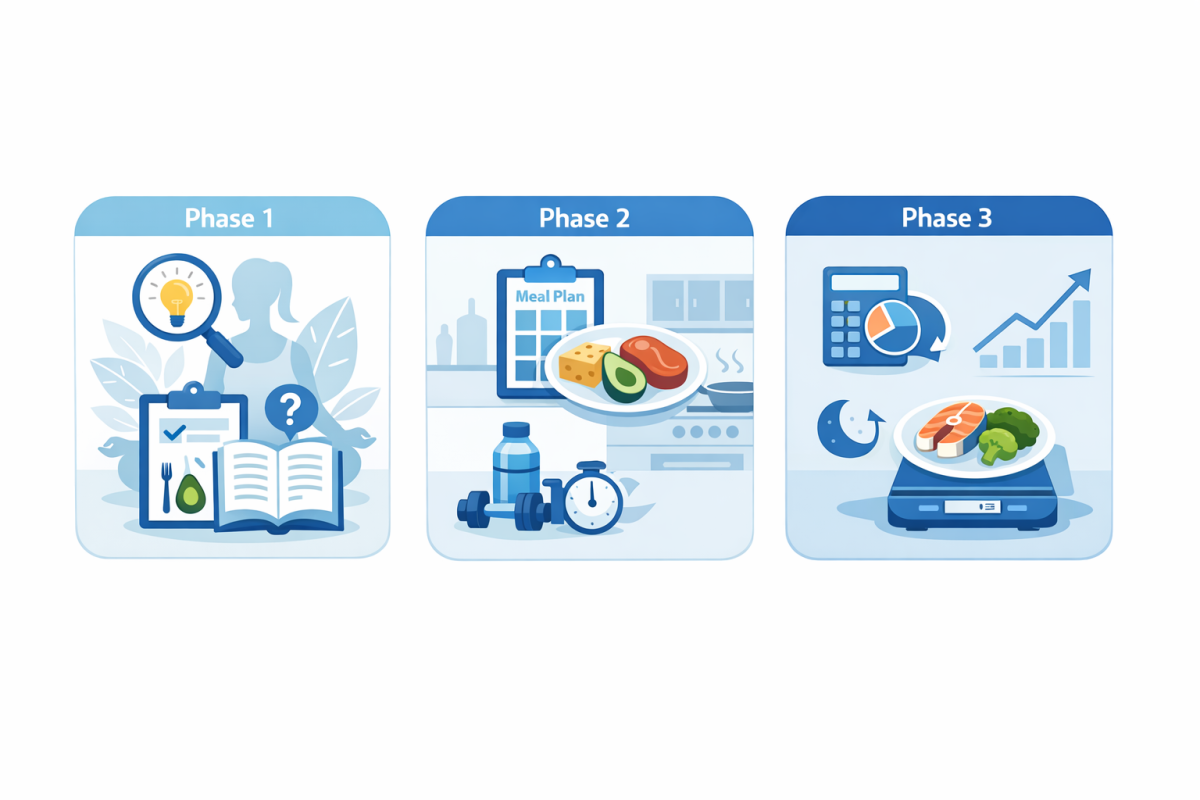
A 3‑Phase, Low‑Stress Plan To Start Keto
Instead of changing everything at once, break your transition into three simple phases. This greatly reduces stress and improves adherence.
Phase 1: Carb awareness week (days 1 to 7)
Goal: See where your carbs are coming from without forcing perfect keto yet.
Actions:
- Write down, or log in an app, what you normally eat for 3 to 5 days
- Circle or flag obvious carb sources: bread, rice, pasta, cereal, pastries, juice, soda, candy, most snacks
- Begin cutting just liquid sugars: soda, juice, sugary coffee drinks, energy drinks
- Make one meal per day more keto‑friendly, for instance, replace a sandwich with a salad plus chicken and olive oil
Why this helps: You build awareness and early wins without the shock of full restriction.
Phase 2: Simple keto structure (days 8 to 21)
Goal: Bring net carbs down to roughly 20 to 30 grams daily using repeatable meals.
Actions:
- Choose 2 breakfasts, 3 lunches, 3 dinners that are clearly low carb and rotate them
- Remove grains and obvious starches from your home where possible, or at least from your personal “go‑to” shelves
- Keep snacks simple: nuts in measured portions, cheese, hard‑boiled eggs, olives, sliced cucumber with guacamole
Sample one‑day structure:
- Breakfast: Eggs scrambled in butter with spinach, side of avocado
- Lunch: Large salad with chicken, olive oil, vinegar, and seeds
- Dinner: Salmon, broccoli roasted in olive oil, small side salad
Phase 3: Fine‑tuning and troubleshooting (days 22 to 30)
Goal: Adjust for hunger, energy, weight loss, and lifestyle.
Actions:
- If you are very hungry, add fat to meals first: more olive oil, avocado, butter, or fattier cuts of meat
- If you feel heavy and sluggish after meals, lower added fats slightly and prioritize leaner proteins and vegetables
- Review your carb sources: many people underestimate carbs in sauces, dressings, nuts, and “keto treats”
What To Eat And What To Avoid Without Memorizing Long Lists
Instead of memorizing dozens of foods, think in categories. This works especially well for busy professionals and parents planning for the whole family.
Core foods to rely on
Use this table as a quick “green light” reference.
| Category | Examples | How To Use Starting Out |
|---|---|---|
| Proteins | Chicken, beef, pork, lamb, eggs, salmon, sardines, tofu | Center every meal around a palm‑sized portion |
| Non‑starchy veg | Leafy greens, broccoli, cauliflower, zucchini, peppers | Fill at least half your plate with these |
| Fats and oils | Olive oil, avocado oil, butter, ghee, coconut oil, avocado | Cook with them, drizzle on salads, add for satiety |
| Nuts and seeds | Almonds, walnuts, pecans, chia, flax, pumpkin seeds | Small handfuls or toppings, not main meals |
| Dairy (if tolerated) | Cheese, Greek yogurt (unsweetened), cream | Use as flavor boosters; watch portions and carbs |
Key Takeaway: Build plates by choosing one from each of the first three rows in the table: protein, non‑starchy veg, and a source of fat.
Foods to avoid or greatly reduce
Focus first on the highest impact items:
- Sugar in all forms: candy, desserts, sweetened yogurt, flavored lattes
- Grains: bread, pasta, rice, tortillas, breakfast cereals
- Starchy vegetables: potatoes, sweet potatoes, corn, peas
- Most fruit: especially bananas, grapes, mango, juice
- “Gluten‑free” processed foods: these are usually high in starch
If you are gluten‑sensitive, keto can make life easier. Most of your staples will be naturally gluten‑free. Just be careful with sauces, processed meats, and seasonings that may contain hidden gluten and added carbs.
Simple family‑friendly swaps
For busy parents cooking for non‑keto family members:
- Serve taco meat with lettuce cups for you, tortillas for them
- Offer burgers with buns for them, bunless with cheese and salad for you
- Cook a sheet pan of chicken thighs and vegetables, add rice or potatoes only to non‑keto plates
[IMAGE: Illustration of a split dinner table, one side with traditional high‑carb versions of meals, other side with keto‑friendly versions of the same meals]
Managing Keto Flu, Cravings, And Energy Without Panic
Many people quit in the first week because they feel tired or foggy. This is usually not a sign that keto is “wrong” for you, but that electrolytes, hydration, or carb reduction speed need adjusting.
Understanding “keto flu”
Keto flu is a cluster of symptoms, such as fatigue, headache, irritability, and mild dizziness, that can occur in the first 3 to 7 days as your body shifts fuel sources and sheds water and electrolytes.
To reduce risk:
- Increase salt: add half a teaspoon of salt to water once or twice daily, unless restricted for medical reasons
- Hydrate: aim for clear or pale‑yellow urine, typically 2 to 3 liters of fluid daily for many adults
- Add potassium and magnesium: leafy greens, avocado, nuts, or supplements if advised by your clinician
Important: If you have kidney disease, high blood pressure, heart disease, or are on diuretics or diabetes medications, talk with your healthcare provider before changing salt or carb intake significantly.
Handling cravings intelligently
Cravings often spike in the evening or when stressed.
Practical strategies:
- Eat enough protein at meals, which improves satiety
- Use “bridge” snacks, such as a small portion of nuts, cheese, or Greek yogurt, rather than white‑knuckling hunger
- Change the cue: drink tea, brush your teeth, take a short walk when the usual snack time hits
Protecting your energy and performance
For professionals and recreational athletes:
- Consider a slightly slower carb reduction if you have high‑intensity training, for instance, drop to 50 grams net carbs first, then to 20 to 30 grams
- Schedule harder workouts later in the day, when you have already eaten one or two meals
- Track sleep carefully, because sleep disruption magnifies fatigue and cravings
Light‑Touch Tracking: Only What Actually Matters
You do not need to track everything forever. However, minimal tracking for the first month can prevent confusion and stall frustration.
Three data points that help most beginners
Focus on:
- Carbs: count net carbs, which is total carbs minus fiber, aiming for 20 to 30 grams
- Weight or waist measurement: once per week, same conditions
- Subjective energy and hunger: use a 1 to 10 scale in a notes app
You can add more metrics later, such as blood glucose or ketone readings, but they are not necessary to start.
When and how to use apps
Tracking apps can be useful, but also overwhelming. To minimize stress:
- Use an app for 7 to 14 days, just to calibrate your sense of portion sizes and carb counts
- Save favorite meals, so you do not need to log from scratch every time
- After two weeks, consider switching to “pattern tracking,” where you only log new or questionable foods
Pro Tip: The goal of tracking is education, not perfection. As soon as you can estimate carbs and portions accurately, you can rely more on patterns than on constant logging.
[IMAGE: Illustration of a simple food diary page with minimal entries, showing carbs, hunger level, and energy score]
Mindset, Expectations, And When Keto Might Not Be Right
A calm, realistic mindset makes the difference between “one more failed diet” and a sustainable lifestyle.
Setting realistic expectations
Evidence from low‑carb and ketogenic studies suggests many people can lose 5 to 10 percent of body weight over several months, improve triglycerides, and reduce blood sugar markers. However, initial dramatic drops on the scale in the first week are mostly water.
Healthy expectations:
- First week: more water and bloating changes than true fat loss
- Weeks 2 to 4: more consistent fat loss, better appetite control
- Months 2 and beyond: slower, steadier progress and metabolic improvements
Reducing all‑or‑nothing thinking
Perfectionism is a major reason people feel overwhelmed.
Try these rules:
- “Never two misses in a row”: if one meal is off‑plan, make the next one solid
- Evaluate weeks, not days: one off day does not erase six good days
- Ask “what did I learn” instead of “how did I fail”
When to reconsider or pause keto
Keto is powerful, but not ideal for everyone, or for every life stage. Consider pausing or getting professional guidance if:
- You have a history of eating disorders and find keto triggering rigid or obsessive behavior
- You are pregnant or breastfeeding and feel significant drops in milk supply or energy
- You experience persistent fatigue, mood issues, or menstrual disruption after the first month, despite adequate calories and nutrients
Expert Insight: Keto should make your life easier over time. If it consistently makes your life smaller, more anxious, or socially isolated, it is worth reassessing the approach or degree of restriction.
Using Meal Resources To Remove Decision Fatigue
Decision fatigue is one of the biggest barriers for busy adults. The fewer choices you have to make each day, the less overwhelmed you will feel.
Creating a personal “default meal” list
Build a list of 5 to 10 meals that:
- Use ingredients you can buy anywhere
- Take less than 20 to 30 minutes to prepare
- You and, ideally, your family enjoy
Examples:
- Omelet with cheese and spinach
- Bunless burger with salad and pickles
- Chicken thighs with roasted broccoli
- Greek salad with grilled chicken and feta
Print this list or keep it on your phone. When you are tired, you choose from the list instead of inventing something new.
How KetoDietRecipes.org can help you simplify
If you want structure without spending hours planning, curated recipe collections can remove guesswork.
KetoDietRecipes.org offers:
- Organized meal ideas by meal type and difficulty
- Clear carb counts and ingredient lists that fit standard keto macros
- Options that are family‑friendly and suitable for gluten‑free households
Instead of trawling the internet for “best keto dinner,” you can select a week’s worth of dinners directly from a focused, keto‑specific resource.
If you are serious about starting keto without overwhelm, but you do not want to design every meal from scratch, explore ready‑made recipes and ideas at KetoDietRecipes.org. They can give you plug‑and‑play meals so you can focus on your goals, not on constant food decisions.
Learn more
Key Takeaways For A Calm Keto Start
- Define keto simply: very low carb, moderate protein, enough fat to feel satisfied
- Use a 3‑phase approach: awareness, structure, then fine‑tune
- Build meals from protein, non‑starchy vegetables, and healthy fats
- Protect hydration and electrolytes to minimize keto flu
- Track only carbs, weekly progress, and energy at first
- Keep a short list of default meals and use resources to avoid decision fatigue
Starting keto does not have to be dramatic or perfect. Focus on the next week, keep your food choices simple, and adjust based on how you feel and what your life actually looks like.
Frequently Asked Questions
How many carbs should I start with to avoid feeling overwhelmed?
Most people do well aiming for about 20 to 30 grams of net carbs per day when starting keto, but you can step down gradually. If you are anxious about a sudden drop, begin at 50 grams for one to two weeks, mainly cutting sugar and obvious starches, then move toward 20 to 30 grams. This phased approach often reduces keto flu and makes the transition feel more manageable.
How long does it take to start feeling better on keto?
Many people feel slightly off in the first 3 to 7 days, then notice improved appetite control and steadier energy in weeks 2 to 4. Full metabolic adaptation, especially for athletes, can take several weeks to a few months. Salt, hydration, and adequate protein are crucial. If you still feel consistently worse after a month, reassess your calories, electrolytes, sleep, and whether keto is appropriate for you.
Can I do keto if I have a family that eats normally?
Yes, if you plan with simple swaps. Cook one main protein and vegetable base for everyone, such as roasted chicken and broccoli. Add rice, pasta, or bread only to the non‑keto plates. You can also serve mix‑and‑match meals, such as tacos with lettuce wraps for you and tortillas for others. Over time, many families naturally adopt some of your lower‑carb meals because they are convenient and tasty.
Do I need to measure ketones to know if I am doing keto correctly?
Ketone testing can be interesting, but it is not required, especially at the beginning. For most beginners, focusing on carb intake, body measurements, hunger, and energy provides enough feedback. If you are using keto for a medical condition under professional supervision, your clinician may recommend blood or breath ketone monitoring, but that is a separate, more specialized use case.
What if I cheat on keto during the first month?
One off‑plan meal or day does not erase your progress. Expect some temporary water weight gain and possibly a brief return of cravings. The most important thing is what you do next. Resume your usual keto meals at the very next opportunity, review what triggered the deviation, and adjust your environment or plan. Using a “never two misses in a row” rule helps prevent a short detour from turning into giving up entirely.