
Why whey protein choice matters on a ketogenic diet
On a ketogenic diet, protein is not just about muscle. It affects ketone production, blood sugar, appetite, and how easy it is to stay on track during busy workdays or around family meals. The right whey protein can support fat loss and performance, while the wrong one can quietly kick you out of ketosis with hidden carbs and sweeteners.
For health‑conscious professionals, active parents, recreational athletes, and anyone managing metabolic markers, whey is often the most practical, high‑quality protein source. You can shake it in 30 seconds, add it to low‑carb recipes, or use it when you are too busy to cook.
This guide walks you through exactly what to look for, what to avoid, and how to match a whey protein powder to your specific keto goals. You will see clear comparisons, best‑for scenarios, and practical tips that go beyond basic “top 10” lists.
Core criteria for keto‑friendly whey protein
Before specific products, you need a simple checklist. Almost every “is this keto?” question about whey can be answered by these criteria.
Carb and sugar limits
For most ketogenic diets:
- Target: 0 to 3 grams total carbs per scoop
- Absolute upper limit: 4 grams, only if you have a larger daily carb budget
- Added sugar: 0 grams
If the label lists sugar, maltodextrin, dextrose, or glucose syrup, it is a red flag. Many mainstream proteins use these as cheap fillers that can spike blood glucose and insulin.
Key Takeaway: Aim for under 3 grams of total carbs per serving, with no added sugars, to avoid unexpected hits to ketosis.
Protein quality and type
Look for:
- At least 20 to 25 grams of protein per scoop
- Complete amino acid profile and high leucine content
- Transparent labeling, including protein source and processing
Whey isolate usually has fewer carbs and lactose than concentrate, which makes it more forgiving on strict keto and for people with lactose sensitivity.
Ingredient transparency
Prefer short, clear ingredient lists. Good signs:
- “Whey protein isolate” or “whey protein concentrate” as the first ingredient
- Natural flavors instead of “artificial flavors”
- Non‑GMO and hormone‑free (often indicated as rBST/rBGH‑free)
Avoid:
- Maltodextrin, corn syrup solids, fructose
- Artificial colors
- Proprietary blends that hide exact amounts
Isolate vs concentrate vs blends: which is best for keto?
Understanding the differences helps you choose the right protein for your goals and budget.
Key differences at a glance
| Type | Typical Protein | Typical Carbs | Lactose Level | Cost | Best For |
|---|---|---|---|---|---|
| Whey isolate | 90%+ by weight | 0–2 g | Very low | Higher | Strict keto, lactose sensitive, cutting |
| Whey concentrate | 70–80% | 2–5 g | Moderate | Lower | Budget‑friendly, moderate keto |
| Isolate blends | 75–90% | 1–3 g | Low–moderate | Midrange | General use, flexible keto |
When to choose whey isolate
Pick isolate if:
- You are keeping carbs under about 20 grams per day
- You are in a fat‑loss phase or contest prep
- You notice bloating or digestive issues from lactose
- Your fasting blood sugar or insulin is a priority metric
Isolates usually mix thinner, which some professionals prefer for quick shakes between meetings or workouts.
When concentrate or blends make sense
Choose a high‑quality concentrate or blend if:
- Your daily carb target is 30 to 50 grams or higher
- You tolerate dairy well and want a creamier texture
- Budget is a primary concern
- The carb difference between 1 gram and 3 grams per scoop is not make‑or‑break
For busy parents making family shakes, a good blend can be a practical middle ground: cost effective, palatable for kids, and still low carb enough for keto‑minded adults.
[IMAGE: Description of the image – style: illustration
A simple side‑by‑side comparison graphic showing three tubs labeled “Isolate,” “Concentrate,” and “Blend,” with icons for protein, carbs, and lactose under each.]
Best whey protein use‑cases for different keto goals
Different lifestyles need different formulations and timing strategies. Here is how to choose “best for” scenarios, even without specific brand names.
Best for fat loss and office‑friendly fasting
Priorities: minimal carbs, appetite control, no blood sugar spikes.
Look for:
- Whey isolate with 0–2 grams carbs and no added sugars
- Lightly sweetened with stevia or monk fruit, or an unflavored version
- 24–27 grams of protein per scoop for satiety
Use cases:
- Replace a carb‑heavy breakfast with a whey shake plus a tablespoon of MCT oil or heavy cream
- Blend with unsweetened almond milk and ice for a lower‑calorie, filling drink between meetings
Best for athletes and active keto dieters
If you are lifting, running, or doing CrossFit on keto, you can generally handle slightly more carbs, especially around training.
Look for:
- 22–26 grams protein
- Up to 3 grams total carbs per serving
- Good leucine content (about 2.5 grams per serving, often listed)
- Products tested for banned substances if you compete
Use cases:
- Post‑workout shake with your full scoop of whey plus electrolytes
- Pre‑workout half‑scoop in cold water for light, digestible protein
Best for beginners and sensitive digestion
Early in keto, people often report GI changes. Some also learn they do not tolerate lactose well.
Look for:
- Whey isolate or a partially hydrolyzed whey
- 0–1 gram carbs and “lactose free” where possible
- No sugar alcohols if you are prone to bloating
Use cases:
- Start with half‑scoops to assess tolerance
- Blend with water or lactose‑free milk alternatives
Pro Tip: If whey causes bloating, test a single‑ingredient unflavored isolate. If that still bothers you, consider rotating with egg white or beef isolate proteins and use whey only occasionally.
Sweeteners, flavors, and additives: what is truly keto‑friendly?
Carb numbers alone do not tell the whole story. Many keto dieters feel fine with certain sweeteners, but get cravings or GI distress from others.
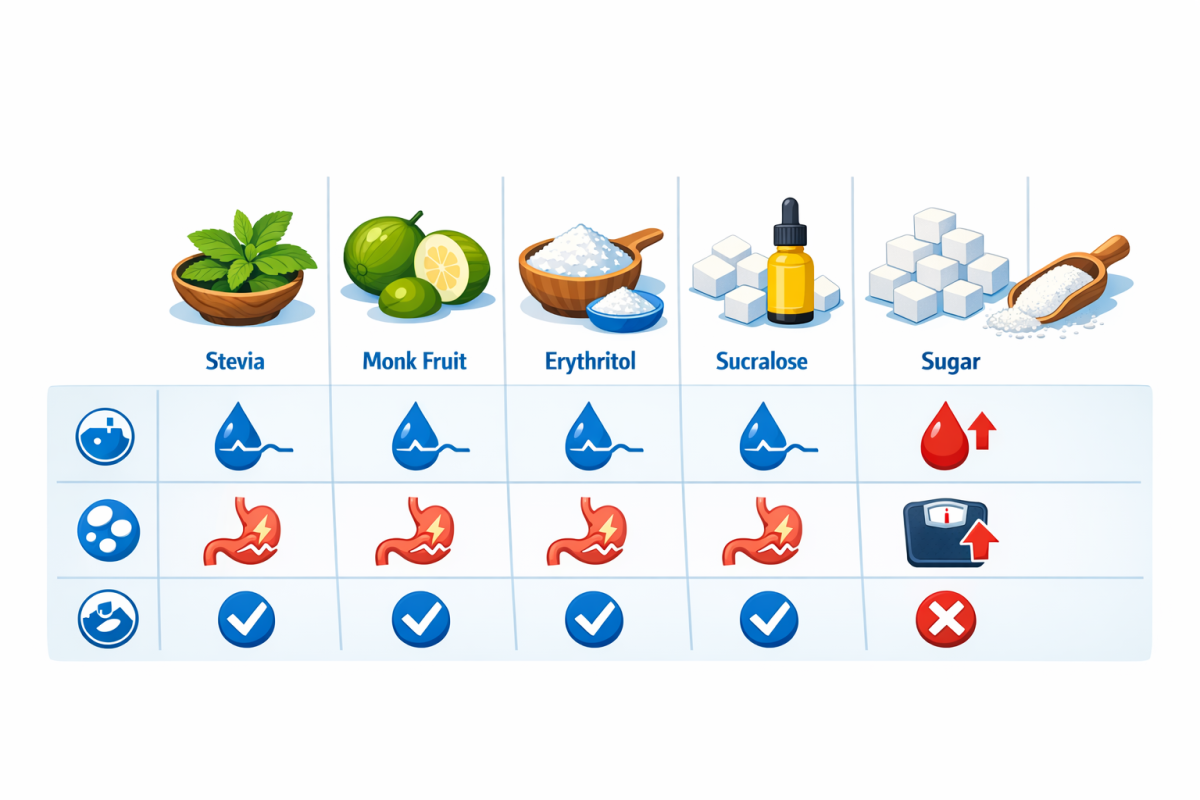
Sweeteners that usually work well on keto
- Stevia: Natural non‑nutritive sweetener, zero carbs
- Monk fruit: Similar to stevia, often blended with erythritol
- Erythritol: Sugar alcohol that typically does not raise blood sugar, but can cause GI issues in high doses
These are common in keto‑specific whey products and generally safe for glucose control. That said, some people report a “sweetness hangover” where even zero‑calorie sweeteners trigger sugar cravings.
Ingredients to limit or avoid
- Sucralose: Zero calories, but some people report GI distress or cravings
- Acesulfame potassium (Ace‑K): Often paired with sucralose, with limited long‑term human data
- Maltodextrin: High glycemic, often used as a hidden filler
- Artificial colors: No carb impact, but unnecessary for most adults
If your primary goal is metabolic health or you have a history of binge‑type eating, strongly consider an unflavored or lightly flavored whey and add your own flavorings, such as cocoa powder or cinnamon.
When to choose unflavored whey
Unflavored whey isolate is ideal if you:
- Want complete control over ingredients
- Prefer to avoid all sweeteners
- Use whey primarily in recipes rather than shakes
Practical uses:
- Stir into scrambled eggs or omelets to increase protein without changing flavor much
- Blend into soups, mashed cauliflower, or keto casseroles
Practical ways to use whey protein on a ketogenic diet
The best whey protein is useless if it sits in your pantry. Here is how different audiences can plug it into real routines.
For busy professionals
- Morning: Coffee blended with whey isolate, a splash of heavy cream, and ice for a “protein latte”
- Lunch backup: Keep a shaker and a single‑serve whey packet at your desk for days when meetings run long
- Travel: Pre‑portion whey in small containers to use with bottled water at airports or hotels
For parents feeding a mixed‑diet family
- Make a “base” shake: Whole‑fat Greek yogurt (if tolerated), whey, and unsweetened almond milk
- For kids: Add berries or a small banana portion
- For keto adults: Add nut butter, MCT oil, and stevia, but skip the fruit
This lets you prepare one family‑friendly blender batch that you adjust per cup.
For fitness enthusiasts
- Pre‑workout: 10–15 grams of whey in water if training fasted, which can protect muscle without overfeeding
- Post‑workout: Full serving with electrolytes to support recovery, especially important if you sweat heavily on low carb
- Recipe use: Mix whey into low‑carb protein “mug cakes” or waffles to create higher protein, portable meals
[IMAGE: Description of the image – style: illustration
An overhead view of three scenarios: a desk with a shaker bottle, a family kitchen with a blender and labeled cups, and a gym bag with a whey tub and shaker.]
Sample brands and what to look for on the label
Since product availability changes often, treat this as a blueprint rather than a static list. When scanning shelves or online listings, apply these patterns.
Label checklist
On any product page or tub, verify:
- Per serving:
- Protein: at least 20 grams
- Total carbs: 0–3 grams
- Sugar: 0 grams
- Ingredients:
- First ingredient: whey protein isolate or blend
- No maltodextrin or added sugar
- Sweeteners: stevia or monk fruit preferred, or none
- Extras:
- Third‑party testing or quality certifications (NSF, Informed‑Sport, etc., if you are an athlete)
- rBST/rBGH‑free whey if hormone exposure is a concern
How to compare two similar products
Imagine you are viewing two isolates:
- Product A: 25 g protein, 1 g carb, sweetened with stevia, higher price
- Product B: 24 g protein, 2 g carbs, sweetened with sucralose, 20 percent cheaper
Consider:
- If you are highly sensitive to sweeteners or are struggling with cravings, Product A is likely better long term.
- If budget is tight and you tolerate sucralose, Product B is still compatible with keto macros.
- If your daily carb budget is under 20 grams, the 1 gram difference may still matter when combined with vegetables, dairy, and seasonings.
Important: Re‑check labels at least once a year. Manufacturers often change formulas, especially sweeteners and fillers, which can quietly shift a product from “keto‑friendly” to “borderline.”
Connect your whey choice to smarter keto meals
Choosing the right whey powder is only half the equation. How you integrate it into meals and recipes determines whether it truly supports your goals.
For example:
- Swap a 60‑gram carb cereal breakfast for a whey shake plus eggs, and many people see improved morning energy and more stable blood sugar within a week.
- Replace a high‑carb post‑workout smoothie with whey isolate blended with avocado, almond milk, and cocoa, and you get similar creaminess with dramatically fewer carbs.
To make this sustainable, you need reliable, low‑carb recipes that already factor in protein quality and macros.
Use KetoDietRecipes.org to build whey into real‑world meals
KetoDietRecipes.org curates ketogenic recipes that emphasize protein quality, low net carbs, and family‑friendly flavors. You can:
- Find shake and smoothie recipes that clearly list macros and are optimized for low‑carb whey
- Discover ways to bake with whey, such as protein breads, muffins, and waffles that stay within keto carb limits
- Filter by goals, such as fat loss, performance, or family‑style dinners, to see where whey makes sense as a core ingredient
If you want your whey protein investment to translate into actual, satisfying meals rather than random shakes, integrating recipes is the missing piece.
Putting it into practice
To choose the best whey protein powder for your ketogenic diet, start with your carb budget and sensitivity to sweeteners, then pick isolate, concentrate, or a blend that fits. Make carb content, ingredient quality, and digestion your top filters.
Next, plug that protein into your real life: fast breakfasts, post‑workout recovery, or family‑friendly shakes. Combine your choice with recipe resources so it becomes a tool rather than a tub gathering dust.
A single smart tub of whey, used consistently, can do more for your keto success than a pantry full of unused supplements.
Frequently Asked Questions
Is whey protein safe for a ketogenic diet?
Yes, whey protein is compatible with keto if you choose a low‑carb product. Aim for 0–3 grams of total carbs per serving, with no added sugars. Whey provides complete protein and supports muscle retention during fat loss. If you notice bloating or GI issues, switch to an isolate and test a smaller serving first.
Will whey protein kick me out of ketosis?
A properly chosen whey protein is very unlikely to knock you out of ketosis. The main risk comes from added sugars or high‑carb fillers. Stick to products with minimal carbs and no sugar. Large protein overfeeding can slightly lower ketone levels, but in normal serving sizes, this is rarely a problem for most people.
Is whey isolate always better than concentrate for keto?
Whey isolate is usually better for strict keto, lactose sensitivity, or fat‑loss phases because it has fewer carbs and less lactose. However, a high‑quality concentrate with 2–4 grams of carbs can still fit a moderate keto diet, especially if budget is a concern and you tolerate dairy well. Choose based on your carb limit and digestion.
How many whey protein shakes can I have per day on keto?
Most people do well with 1–2 shakes per day, depending on total protein targets and meal structure. Use whey to fill gaps, not to replace all whole‑food protein. For example, one shake after training and one quick breakfast shake is reasonable. Track total protein intake to avoid under‑ or over‑eating relative to your goals.
What is the best time to take whey protein on a ketogenic diet?
The most practical times are in the morning, when you need a fast low‑carb meal, or around workouts, to support recovery. Busy professionals often use whey as a breakfast replacement, while athletes prefer it post‑workout. The exact timing matters less than consistent daily intake and keeping carbs and ingredients keto‑friendly.